Ship:American Cruisers Collection
imported>Lille65:eu No edit summary |
No edit summary |
||
| Line 1: | Line 1: | ||
__NOEDITSECTION__ | |||
[[File: | {| class="gw-frame-1" style="width:100%;" | ||
| style="padding: 8px; width:150px;" | | |||
[[File:collection_token_PCZA009_AmericanArc.png|140px|left]] | |||
<br> | |||
| style="vertical-align:middle; padding: 15px" | | |||
==<big><big><big>American Cruisers</big></big></big>== | |||
This collection is available once players complete the final task of Mission 1 of the [[Ship:Hit Hard Hit Fast Hit Often|"Hit Hard! Hit Fast! Hit Often!"]] campaign. Earning the first collection item via completion of the campaign task or purchase of special containers from the Wargaming store unlocks the ability for collection items to drop from regular Containers earned through daily missions. | |||
|} | |||
</div></div></div> | |||
<div class="b-popup"><div class="b-popup_head js-tech-nav_head"><div><h2>"Cruisers, 1900s - 1930s"</h2></div><span class="b-tech-nav_arrow"></span></div><div class="b-popup_content" style="display: none;"><div> | |||
== | |||
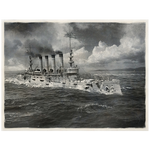
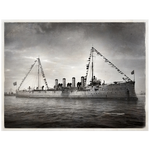
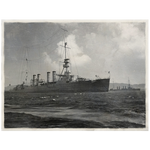
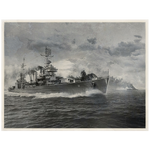
<div id="achievement" style="min-height:180px;">[[File:PCZC176 AA St Louis.png|150px|left|link=]] '''USS ''St. Louis'' in the Strait of Magellan, 1907'''<br><br>Cruiser [[St. Louis]], named after a city in the state of Missouri, was laid down in 1902. At the early stage of design, it was planned to build a series of ships based on the design of the U.S. flagship in the Battle of Manila Bay, cruiser Olympia, with some improvements. According to that design, the ship would have had a displacement of 6,000 tons, combined armament including heavy and rapid-fire guns, and a speed of 20 knots. However, at one of the American shipyards, cruiser ''[[Varyag]]'' was laid down for the Russian Navy. She was bigger than Olympia's descendants, carried 152 mm guns and her speed was up to 23 knots. That forced the American engineers to revise the design.<br><br>When ''St. Louis'' entered the U.S. Navy, she had a displacement of 10,000 tons, fourteen 152 mm guns, and a speed of 22 knots. The armor belt protecting the propulsion provided a significant advantage compared to other same-type ships with rapid-fire artillery, most of which were protected by an armored deck.<br><br>After her trials, the beautiful new ship with four steam stacks and snow-white sides shining moved to San Diego from New York. On the way, this cruiser entered many Latin American ports where it made a good impression, and passed from the Atlantic Ocean to the Pacific Ocean through the Strait of Magellan.<br><br></div> | <div id="achievement" style="min-height:180px;">[[File:PCZC176 AA St Louis.png|150px|left|link=]] '''USS ''St. Louis'' in the Strait of Magellan, 1907'''<br><br>Cruiser [[St. Louis]], named after a city in the state of Missouri, was laid down in 1902. At the early stage of design, it was planned to build a series of ships based on the design of the U.S. flagship in the Battle of Manila Bay, cruiser Olympia, with some improvements. According to that design, the ship would have had a displacement of 6,000 tons, combined armament including heavy and rapid-fire guns, and a speed of 20 knots. However, at one of the American shipyards, cruiser ''[[Varyag]]'' was laid down for the Russian Navy. She was bigger than Olympia's descendants, carried 152 mm guns and her speed was up to 23 knots. That forced the American engineers to revise the design.<br><br>When ''St. Louis'' entered the U.S. Navy, she had a displacement of 10,000 tons, fourteen 152 mm guns, and a speed of 22 knots. The armor belt protecting the propulsion provided a significant advantage compared to other same-type ships with rapid-fire artillery, most of which were protected by an armored deck.<br><br>After her trials, the beautiful new ship with four steam stacks and snow-white sides shining moved to San Diego from New York. On the way, this cruiser entered many Latin American ports where it made a good impression, and passed from the Atlantic Ocean to the Pacific Ocean through the Strait of Magellan.<br><br></div> | ||
| Line 20: | Line 23: | ||
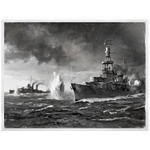
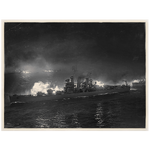
<div id="achievement" style="min-height:180px;">[[File:PCZC181 AA Helena.png|150px|left|link=]] '''USS ''Helena'' in the Battle of Cape Esperance, 1942'''<br><br>The information that Japan was building ''[[Mogami]]''-class cruisers armed with fifteen 155 mm guns shocked the U.S. Naval Command. The project for a light cruiser with 152mm artillery, which had been in development since 1930, was quickly revised, and her four triple turrets were complemented with a fifth.<br><br>In 1935, when most of these cruisers had already been laid down, an updated project was prepared. The advanced design had a new propulsion system and a full-fledged dual-purpose artillery consisting of the newest twin 127 mm turrets. A year later, two ships — USS ''St. Louis'' and USS ''[[Helena]]'' — were laid down, becoming part of the Navy in 1939.<br><br>Light cruiser ''Helena'' became one of the victims of the Japanese assault on Pearl Harbor on 7 December 1941, being hit by a torpedo once. After completion of the repair works in the summer of 1942, the cruiser actively joined the fight for the Solomon Islands, taking part in several major battles, the most successful of which being the night battle of Cape Esperance in October 1942. Thanks to being equipped with the latest radar, USS ''Helena'' was the first to disclose the approach of a Japanese squadron. Allowing the enemy ships to approach, the cruiser was the first to burst her rapid fire at the Japanese. USS ''Helena''’s shells proved fatal for destroyer ''[[Fubuki]]'' and set cruiser ''[[Furutaka]]'' ablaze. The result of the battle was a hasty retreat of the defeated Japanese squadron.<br><br>Cruiser ''Helena''’s promising career tragically ended in July 1943, when three 610mm torpedoes from Japanese destroyers sank her in the Battle of Kula Gulf.<br><br></div> | <div id="achievement" style="min-height:180px;">[[File:PCZC181 AA Helena.png|150px|left|link=]] '''USS ''Helena'' in the Battle of Cape Esperance, 1942'''<br><br>The information that Japan was building ''[[Mogami]]''-class cruisers armed with fifteen 155 mm guns shocked the U.S. Naval Command. The project for a light cruiser with 152mm artillery, which had been in development since 1930, was quickly revised, and her four triple turrets were complemented with a fifth.<br><br>In 1935, when most of these cruisers had already been laid down, an updated project was prepared. The advanced design had a new propulsion system and a full-fledged dual-purpose artillery consisting of the newest twin 127 mm turrets. A year later, two ships — USS ''St. Louis'' and USS ''[[Helena]]'' — were laid down, becoming part of the Navy in 1939.<br><br>Light cruiser ''Helena'' became one of the victims of the Japanese assault on Pearl Harbor on 7 December 1941, being hit by a torpedo once. After completion of the repair works in the summer of 1942, the cruiser actively joined the fight for the Solomon Islands, taking part in several major battles, the most successful of which being the night battle of Cape Esperance in October 1942. Thanks to being equipped with the latest radar, USS ''Helena'' was the first to disclose the approach of a Japanese squadron. Allowing the enemy ships to approach, the cruiser was the first to burst her rapid fire at the Japanese. USS ''Helena''’s shells proved fatal for destroyer ''[[Fubuki]]'' and set cruiser ''[[Furutaka]]'' ablaze. The result of the battle was a hasty retreat of the defeated Japanese squadron.<br><br>Cruiser ''Helena''’s promising career tragically ended in July 1943, when three 610mm torpedoes from Japanese destroyers sank her in the Battle of Kula Gulf.<br><br></div> | ||
==="Cruisers, 1900s-1930s" Collection — Reward=== | ==="Cruisers, 1900s-1930s" Collection — Reward=== | ||
Completing this sub-collection provides the following rewards: | Completing this sub-collection provides the following rewards: | ||
| Line 35: | Line 38: | ||
* Unlocks the ability to mount two [[Ship:Flags|flags]] on all [[File:Wows flag USA.png|20px|frameless|link=]] [[Ship:Ships of U.S.A.#Cruisers|American cruisers]]. | * Unlocks the ability to mount two [[Ship:Flags|flags]] on all [[File:Wows flag USA.png|20px|frameless|link=]] [[Ship:Ships of U.S.A.#Cruisers|American cruisers]]. | ||
|} | |} | ||
</div></div></div> | |||
<div class="b-popup"><div class="b-popup_head js-tech-nav_head"><div><h2>"Main Battery" Collection</h2></div><span class="b-tech-nav_arrow"></span></div><div class="b-popup_content" style="display: none;"><div> | |||
<div | |||
<div | |||
<div | |||
< | |||
<div | |||
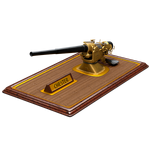
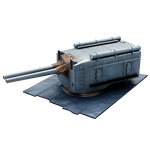
<div id="achievement" style="min-height:180px;">[[File:PCZC188 AA 127mm mark5 6.png|150px|left|link=]] '''127mm Mark 5/6 Gun'''<br><br>Five-inch (127mm) caliber guns were very popular in the U.S. Navy. The 127 mm guns (Mark 1) first appeared in the arsenal of the U.S. Navy cruisers in the 1880s. By 1901, a new, long-barreled, five-inch Mark 5 gun had been developed, and a few years later its slightly modified version, the Mark 6, was created. Despite that, all loading operations were done manually, Mark 5/6 guns could fire 6 to 8 AP shells, weighing 22 to 27kg, per minute.<br><br>127 mm Mark 5/6 guns were mounted as the main battery on [[Chester]]-class light cruisers, and as secondary battery on Delaware-class battleships. Moreover, they were mounted on a number of older ships. For example, in 1904-1907, cruiser Albany got ten 127 mm guns instead of here 152 mm and 120 mm guns made in England.<br><br>In the 1910s, the Mark 5/6 was replaced by the 127 mm Mark 7/8 gun which had a higher rate of fire and better penetration capability. However, even during World War II, a few Mark 5/6 mounts could still be seen in the arsenal of auxiliary vessels and coastal batteries.<br><br></div> | <div id="achievement" style="min-height:180px;">[[File:PCZC188 AA 127mm mark5 6.png|150px|left|link=]] '''127mm Mark 5/6 Gun'''<br><br>Five-inch (127mm) caliber guns were very popular in the U.S. Navy. The 127 mm guns (Mark 1) first appeared in the arsenal of the U.S. Navy cruisers in the 1880s. By 1901, a new, long-barreled, five-inch Mark 5 gun had been developed, and a few years later its slightly modified version, the Mark 6, was created. Despite that, all loading operations were done manually, Mark 5/6 guns could fire 6 to 8 AP shells, weighing 22 to 27kg, per minute.<br><br>127 mm Mark 5/6 guns were mounted as the main battery on [[Chester]]-class light cruisers, and as secondary battery on Delaware-class battleships. Moreover, they were mounted on a number of older ships. For example, in 1904-1907, cruiser Albany got ten 127 mm guns instead of here 152 mm and 120 mm guns made in England.<br><br>In the 1910s, the Mark 5/6 was replaced by the 127 mm Mark 7/8 gun which had a higher rate of fire and better penetration capability. However, even during World War II, a few Mark 5/6 mounts could still be seen in the arsenal of auxiliary vessels and coastal batteries.<br><br></div> | ||
| Line 97: | Line 51: | ||
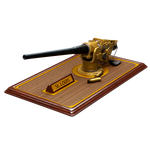
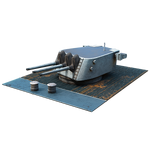
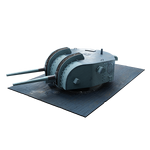
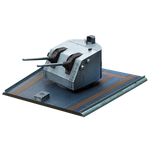
<div id="achievement" style="min-height:180px;">[[File:PCZC193_AA_152mm_universal_mark32.png|150px|left|link=]] '''127mm Mark 29 Dual-Purpose Mount'''<br><br>Developed in the United States by 1932, the 127 mm Mark 12 gun became the basis of the most numerous dual-purpose artillery system that existed in a multitude of variants and was mounted almost on every major U.S. Navy warship in the period from 1934 to 1945.<br><br>The first dual-purpose twin turrets with mark 12 guns appeared in 1939. The were designated as Mark 29 and mounted on light cruisers [[Helena]] and St. Louis to provide them with long-range AA defense capabilities and, as an addition to the main 152 mm battery, to attack other ships and onshore targets, [[Atlanta]]-class cruisers which had 6 to 8 such turrets became the world's first ships of this type with dual-purpose mounts as their main battery.<br><br>Mark 29 was a highly efficient artillery system. A heavy-duty power drive and reliable mechanisms ensured a horizontal aiming speed of 25 degrees per second, and a vertical aiming speed of 15 degrees per second. The turret guns had a nominal rate of fire of 15 shots per minute, shooting up to 22 shells—each weighing about 25 kg--per minute.<br><br>The basis for dual-purpose artillery on the subsequent classes of American cruisers--[[Cleveland]], [[Baltimore]] and [[Des Moines]]—was a slightly modified Mark 32 mount.<br><br></div> | <div id="achievement" style="min-height:180px;">[[File:PCZC193_AA_152mm_universal_mark32.png|150px|left|link=]] '''127mm Mark 29 Dual-Purpose Mount'''<br><br>Developed in the United States by 1932, the 127 mm Mark 12 gun became the basis of the most numerous dual-purpose artillery system that existed in a multitude of variants and was mounted almost on every major U.S. Navy warship in the period from 1934 to 1945.<br><br>The first dual-purpose twin turrets with mark 12 guns appeared in 1939. The were designated as Mark 29 and mounted on light cruisers [[Helena]] and St. Louis to provide them with long-range AA defense capabilities and, as an addition to the main 152 mm battery, to attack other ships and onshore targets, [[Atlanta]]-class cruisers which had 6 to 8 such turrets became the world's first ships of this type with dual-purpose mounts as their main battery.<br><br>Mark 29 was a highly efficient artillery system. A heavy-duty power drive and reliable mechanisms ensured a horizontal aiming speed of 25 degrees per second, and a vertical aiming speed of 15 degrees per second. The turret guns had a nominal rate of fire of 15 shots per minute, shooting up to 22 shells—each weighing about 25 kg--per minute.<br><br>The basis for dual-purpose artillery on the subsequent classes of American cruisers--[[Cleveland]], [[Baltimore]] and [[Des Moines]]—was a slightly modified Mark 32 mount.<br><br></div> | ||
==="Main Battery" Collection — Reward=== | ==="Main Battery" Collection — Reward=== | ||
Completing this sub-collection provides the following rewards: | Completing this sub-collection provides the following rewards: | ||
| Line 112: | Line 66: | ||
* Unlocks the ability to mount two [[Ship:Flags|flags]] on all [[File:Wows flag USA.png|20px|frameless|link=]] [[Ship:Ships of U.S.A.#Aircraft Carriers|American aircraft carriers]]. | * Unlocks the ability to mount two [[Ship:Flags|flags]] on all [[File:Wows flag USA.png|20px|frameless|link=]] [[Ship:Ships of U.S.A.#Aircraft Carriers|American aircraft carriers]]. | ||
|} | |} | ||
</div></div></div> | |||
</div></div></div> | |||
== | <div class="b-popup"><div class="b-popup_head js-tech-nav_head"><div><h2>"Anti-Aircraft Guns" Collection</h2></div><span class="b-tech-nav_arrow"></span></div><div class="b-popup_content" style="display: none;"><div> | ||
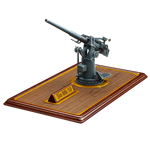
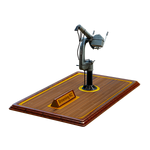
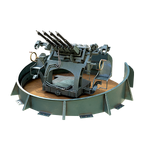
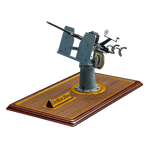
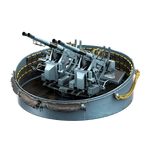
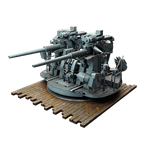
<div id="achievement" style="min-height:180px;">[[File:PCZC194 AA 76mm antiaircraft.png|150px|left|link=]] '''76mm Mark 10 AA Gun'''<br><br>One of the first AA guns of the U.S. Navy, the Mark 10 with a caliber of 76 mm, was developed in 1913–1915 on the basis of an earlier system, the Mark 6, widely used as a secondary battery on U.S. ships built in the 1900s. The Mark 10 gun could fire at elevation angles of up to 85 degrees. Formally, it had a dual purpose, as it could theoretically attack both air and surface targets. However, the Mark 10 was not sufficiently effective in either. In the first case, because it had only manual aiming, in the second case, because the shells were too light.<br /><br /> | <div id="achievement" style="min-height:180px;">[[File:PCZC194 AA 76mm antiaircraft.png|150px|left|link=]] '''76mm Mark 10 AA Gun'''<br><br>One of the first AA guns of the U.S. Navy, the Mark 10 with a caliber of 76 mm, was developed in 1913–1915 on the basis of an earlier system, the Mark 6, widely used as a secondary battery on U.S. ships built in the 1900s. The Mark 10 gun could fire at elevation angles of up to 85 degrees. Formally, it had a dual purpose, as it could theoretically attack both air and surface targets. However, the Mark 10 was not sufficiently effective in either. In the first case, because it had only manual aiming, in the second case, because the shells were too light.<br /><br /> | ||
Until the late 1920s, 76 mm Mark 10 guns were almost the sole AA artillery systems mounted on large warships of the U.S. Navy. New York-class battleships were among the first to receive them during rearmament in 1916.<br /><br /> | Until the late 1920s, 76 mm Mark 10 guns were almost the sole AA artillery systems mounted on large warships of the U.S. Navy. New York-class battleships were among the first to receive them during rearmament in 1916.<br /><br /> | ||
| Line 134: | Line 90: | ||
It was decided to return 76 mm guns to the AA artillery in more advanced power-driven mounts. Only after the war was the most efficient 76 mm AA gun developed—the twin Mark 33. This weapon which had a very high aiming speed (24 degrees per second horizontally, 30 degrees per second vertically), the ability to fire up to 50 shells per minute from each barrel, exhaustive destructive force of the projectile, with a maximum engagement of over 9 km in height, crowned the development of American AA defense systems in the 1940s.<br /><br /> | It was decided to return 76 mm guns to the AA artillery in more advanced power-driven mounts. Only after the war was the most efficient 76 mm AA gun developed—the twin Mark 33. This weapon which had a very high aiming speed (24 degrees per second horizontally, 30 degrees per second vertically), the ability to fire up to 50 shells per minute from each barrel, exhaustive destructive force of the projectile, with a maximum engagement of over 9 km in height, crowned the development of American AA defense systems in the 1940s.<br /><br /> | ||
One of the first to receive Mark 33 mounts was light cruiser [[Worcester]], commissioned in 1948. The U.S. Navy used these weapons until the 1980s.<br><br></div> | One of the first to receive Mark 33 mounts was light cruiser [[Worcester]], commissioned in 1948. The U.S. Navy used these weapons until the 1980s.<br><br></div> | ||
==="Anti-Aircraft Guns" Collection — Reward=== | ==="Anti-Aircraft Guns" Collection — Reward=== | ||
Completing this sub-collection provides the following rewards: | Completing this sub-collection provides the following rewards: | ||
| Line 149: | Line 105: | ||
* Unlocks the ability to mount two [[Ship:Flags|flags]] on all [[File:Wows flag USA.png|20px|frameless|link=]] [[Ship:Ships of U.S.A.#Destroyers|American destroyers]]. | * Unlocks the ability to mount two [[Ship:Flags|flags]] on all [[File:Wows flag USA.png|20px|frameless|link=]] [[Ship:Ships of U.S.A.#Destroyers|American destroyers]]. | ||
|} | |} | ||
</div></div></div> | |||
== | <div class="b-popup"><div class="b-popup_head js-tech-nav_head"><div><h2>"Highest Awards" Collection</h2></div><span class="b-tech-nav_arrow"></span></div><div class="b-popup_content" style="display: none;"><div> | ||
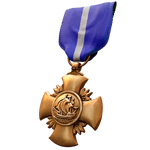
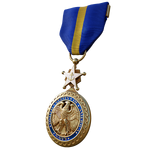
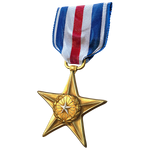
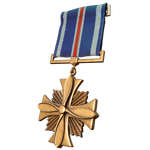
<div id="achievement" style="min-height:180px;">[[File:PCZC200 AA Medal of Honor.png|150px|left|link=]] '''Navy Medal of Honor'''<br><br>The Medal of Honor is the highest and most valuable decoration a service member can receive. The Army, Air Force, and Navy have their own specific versions of the medal. The Navy Medal of Honor was established in 1861, at the beginning of the American Civil War, and is the oldest version of the decoration.<br><br>Only around 3,500 people have been awarded with any kind of Medal of Honor throughout its history. In the Navy, it can be awarded to anyone, from a simple sailor to an admiral. One of those to receive the Navy Medal of Honor posthumously was Rear Admiral Norman Scott, who commanded a squadron in the Battle of Cape Esperance in October 1942, the U.S. Navy's first surface victory of the Pacific Campaign.<br><br>A month later, the admiral perished on the bridge of his flagship, cruiser USS ''[[Atlanta]]'', in the initial naval battle of Guadalcanal.<br><br></div> | <div id="achievement" style="min-height:180px;">[[File:PCZC200 AA Medal of Honor.png|150px|left|link=]] '''Navy Medal of Honor'''<br><br>The Medal of Honor is the highest and most valuable decoration a service member can receive. The Army, Air Force, and Navy have their own specific versions of the medal. The Navy Medal of Honor was established in 1861, at the beginning of the American Civil War, and is the oldest version of the decoration.<br><br>Only around 3,500 people have been awarded with any kind of Medal of Honor throughout its history. In the Navy, it can be awarded to anyone, from a simple sailor to an admiral. One of those to receive the Navy Medal of Honor posthumously was Rear Admiral Norman Scott, who commanded a squadron in the Battle of Cape Esperance in October 1942, the U.S. Navy's first surface victory of the Pacific Campaign.<br><br>A month later, the admiral perished on the bridge of his flagship, cruiser USS ''[[Atlanta]]'', in the initial naval battle of Guadalcanal.<br><br></div> | ||
| Line 164: | Line 119: | ||
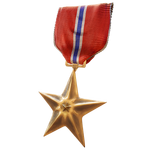
<div id="achievement" style="min-height:180px;">[[File:PCZC205 AA Bronze Star.png|150px|left|link=]] '''Bronze Star Medal'''<br><br>The Bronze Star Medal is the next significant U.S. decoration after the Silver Star Medal. It was established in 1944 and is awarded for heroism manifested in a war zone.If an act of heroism is displayed in combat, the "V" Device (Which stands for Valor) is attached to the ribbon of the medal. The medal can be awarded to service members of any type of the U.S. Armed Forces, including the Navy, as well as to civilians and as an exception, even to foreign citizens.<br><br>The Bronze Star Medal was deservedly awarded to the legend of world cinema Henry Fonda, who, in 1942, was voluntarily commissioned into the U.S. Navy and served on a destroyer, air transport, and in Air Combat Intelligence in the Pacific Ocean<br><br></div> | <div id="achievement" style="min-height:180px;">[[File:PCZC205 AA Bronze Star.png|150px|left|link=]] '''Bronze Star Medal'''<br><br>The Bronze Star Medal is the next significant U.S. decoration after the Silver Star Medal. It was established in 1944 and is awarded for heroism manifested in a war zone.If an act of heroism is displayed in combat, the "V" Device (Which stands for Valor) is attached to the ribbon of the medal. The medal can be awarded to service members of any type of the U.S. Armed Forces, including the Navy, as well as to civilians and as an exception, even to foreign citizens.<br><br>The Bronze Star Medal was deservedly awarded to the legend of world cinema Henry Fonda, who, in 1942, was voluntarily commissioned into the U.S. Navy and served on a destroyer, air transport, and in Air Combat Intelligence in the Pacific Ocean<br><br></div> | ||
==="Highest Awards" Collection — Reward=== | ==="Highest Awards" Collection — Reward=== | ||
Completing this sub-collection provides the following rewards: | Completing this sub-collection provides the following rewards: | ||
| Line 173: | Line 128: | ||
! style="width: 100px; vertical-align:middle" | Icon | ! style="width: 100px; vertical-align:middle" | Icon | ||
! style="width: 100px; vertical-align:middle" | Type | ! style="width: 100px; vertical-align:middle" | Type | ||
|- | |- | ||
| style="vertical-align:middle;" | [[File:Reward_unlock_camo.png|frameless|center|link=]] | | style="vertical-align:middle;" | [[File:Reward_unlock_camo.png|frameless|center|link=]] | ||
| style="vertical-align:middle;" | ''' | | style="vertical-align:middle;" | '''Patches<br> Stripes<br>Tiles<br>Lines''' | ||
|} | |} | ||
</div></div></div> | |||
== | <div class="b-popup"><div class="b-popup_head js-tech-nav_head"><div><h2>"Orders and Medals" Collection</h2></div><span class="b-tech-nav_arrow"></span></div><div class="b-popup_content" style="display: none;"><div> | ||
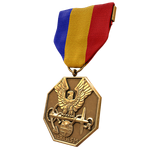
<div id="achievement" style="min-height:180px;">[[File:PCZC206 AA Marine Corps.png|150px|left|link=]] '''Navy and Marine Corps Medal'''<br><br>The U.S. Navy and Marine Corps Medal was established in 1942 and is awarded for heroism shown by a member of the U.S. Navy in a non-combat situation. The decoration is typically awarded for actions related to the rescue of people in a life-threatening situation. Often it is awarded posthumously.<br><br>During the Japanese attack on Pearl Harbor, Rev. Aloysius Schmitt, a chaplain on the USS Oklahoma, when the ship had already been fatally damaged by nine torpedoes, became trapped in one of the inner compartments together with other crew members. Before the ship sank, Father Schmitt helped twelve sailors escape from the trap, refusing to save himself. For his heroism, the Chaplain was posthumously awarded with the Navy and Marine Corps Medal.<br><br></div> | <div id="achievement" style="min-height:180px;">[[File:PCZC206 AA Marine Corps.png|150px|left|link=]] '''Navy and Marine Corps Medal'''<br><br>The U.S. Navy and Marine Corps Medal was established in 1942 and is awarded for heroism shown by a member of the U.S. Navy in a non-combat situation. The decoration is typically awarded for actions related to the rescue of people in a life-threatening situation. Often it is awarded posthumously.<br><br>During the Japanese attack on Pearl Harbor, Rev. Aloysius Schmitt, a chaplain on the USS Oklahoma, when the ship had already been fatally damaged by nine torpedoes, became trapped in one of the inner compartments together with other crew members. Before the ship sank, Father Schmitt helped twelve sailors escape from the trap, refusing to save himself. For his heroism, the Chaplain was posthumously awarded with the Navy and Marine Corps Medal.<br><br></div> | ||
| Line 196: | Line 148: | ||
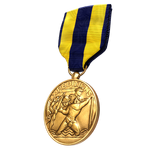
<div id="achievement" style="min-height:180px;">[[File:PCZC211 AA Expeditionary Medal.png|150px|left|link=]] '''Navy Expeditionary Medal'''<br><br>The U.S. Navy Expeditionary Medal was established in 1936 to reward Navy members, both officers and non-officers, who landed on foreign territory or were engaged in operations for which no special insignia is envisaged.<br><br>Initially, the statute of the medal assumed retroactive awards—it could be awarded to participants in Navy operation since 1874, when a landing on Hawaiian Islands took place.<br><br></div> | <div id="achievement" style="min-height:180px;">[[File:PCZC211 AA Expeditionary Medal.png|150px|left|link=]] '''Navy Expeditionary Medal'''<br><br>The U.S. Navy Expeditionary Medal was established in 1936 to reward Navy members, both officers and non-officers, who landed on foreign territory or were engaged in operations for which no special insignia is envisaged.<br><br>Initially, the statute of the medal assumed retroactive awards—it could be awarded to participants in Navy operation since 1874, when a landing on Hawaiian Islands took place.<br><br></div> | ||
==="Orders and Medals" Collection — Reward=== | ==="Orders and Medals" Collection — Reward=== | ||
Completing this sub-collection provides the following rewards: | Completing this sub-collection provides the following rewards: | ||
| Line 205: | Line 157: | ||
! style="width: 100px; vertical-align:middle" | Icon | ! style="width: 100px; vertical-align:middle" | Icon | ||
! style="width: 100px; vertical-align:middle" | Type | ! style="width: 100px; vertical-align:middle" | Type | ||
|- | |- | ||
| style="vertical-align:middle;" | [[File:Reward_unlock_camo.png|frameless|center|link=]] | | style="vertical-align:middle;" | [[File:Reward_unlock_camo.png|frameless|center|link=]] | ||
| style="vertical-align:middle;" | ''' | | style="vertical-align:middle;" | '''Patches<br> Stripes<br>Tiles<br>Lines''' | ||
|} | |} | ||
</div></div></div> | |||
== | <div class="b-popup"><div class="b-popup_head js-tech-nav_head"><div><h2>"Combat Ratings" Collection</h2></div><span class="b-tech-nav_arrow"></span></div><div class="b-popup_content" style="display: none;"><div> | ||
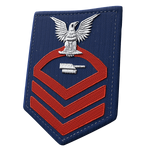
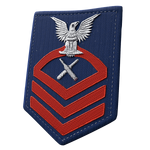
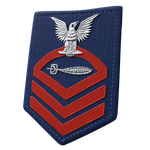
<div id="achievement" style="min-height:180px;">[[File:PCZC212 AA Turret Captain.png|150px|left|link=]] '''Turret Captain'''<br><br>The rating of Turret Captain was established in the U.S. Navy in the early 1900s, in the period of rapid construction of the fleet and emergence of a large number of ships with turret artillery. The functions of the Turret Captain—who ranked next to the Turret Commander—was to ensure fail-safe operation of the gun mount, to instruct the turret personnel, and to monitor how servicemen performed their duties.<br /><br /> | <div id="achievement" style="min-height:180px;">[[File:PCZC212 AA Turret Captain.png|150px|left|link=]] '''Turret Captain'''<br><br>The rating of Turret Captain was established in the U.S. Navy in the early 1900s, in the period of rapid construction of the fleet and emergence of a large number of ships with turret artillery. The functions of the Turret Captain—who ranked next to the Turret Commander—was to ensure fail-safe operation of the gun mount, to instruct the turret personnel, and to monitor how servicemen performed their duties.<br /><br /> | ||
The Turret Captain's patch remained nearly unchanged since 1904. It was worn on the right sleeve and was abolished in 1949 together with the rating, becoming merged with the rating of the Gunner's Mate.<br><br></div> | The Turret Captain's patch remained nearly unchanged since 1904. It was worn on the right sleeve and was abolished in 1949 together with the rating, becoming merged with the rating of the Gunner's Mate.<br><br></div> | ||
| Line 228: | Line 178: | ||
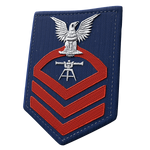
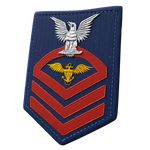
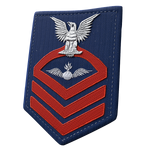
<div id="achievement" style="min-height:180px;">[[File:PCZC217 AA Ordinanceman.png|150px|left|link=]] '''Aviation Ordnanceman'''<br><br>Aviation Ordnancemen were designated a specific rating in the Navy in 1926. Their duties included storage, check, and maintenance of all types of weapons and ammunition for naval aviation, including their loading and installation on aircraft.<br /><br /> | <div id="achievement" style="min-height:180px;">[[File:PCZC217 AA Ordinanceman.png|150px|left|link=]] '''Aviation Ordnanceman'''<br><br>Aviation Ordnancemen were designated a specific rating in the Navy in 1926. Their duties included storage, check, and maintenance of all types of weapons and ammunition for naval aviation, including their loading and installation on aircraft.<br /><br /> | ||
The emblem of Aviation Ordnancemen contains an image of a grenade with a flame and adjacent wings. The emblem was worn on the left sleeve. The patches for this rating are preserved in this form to this day.<br><br></div> | The emblem of Aviation Ordnancemen contains an image of a grenade with a flame and adjacent wings. The emblem was worn on the left sleeve. The patches for this rating are preserved in this form to this day.<br><br></div> | ||
==="Combat Ratings" Collection — Reward=== | ==="Combat Ratings" Collection — Reward=== | ||
Completing this sub-collection provides the following rewards: | Completing this sub-collection provides the following rewards: | ||
| Line 237: | Line 187: | ||
! style="width: 100px; vertical-align:middle" | Icon | ! style="width: 100px; vertical-align:middle" | Icon | ||
! style="width: 100px; vertical-align:middle" | Type | ! style="width: 100px; vertical-align:middle" | Type | ||
|- | |- | ||
| style="vertical-align:middle;" | [[File:Reward_unlock_camo.png|frameless|center|link=]] | | style="vertical-align:middle;" | [[File:Reward_unlock_camo.png|frameless|center|link=]] | ||
| style="vertical-align:middle;" | ''' | | style="vertical-align:middle;" | '''Patches<br> Stripes<br>Tiles<br>Lines''' | ||
|} | |} | ||
</div></div></div> | |||
== | <div class="b-popup"><div class="b-popup_head js-tech-nav_head"><div><h2>"Other Ratings" Collection</h2></div><span class="b-tech-nav_arrow"></span></div><div class="b-popup_content" style="display: none;"><div> | ||
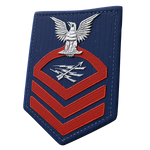
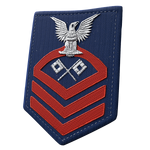
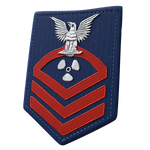
<div id="achievement" style="min-height:180px;">[[File:PCZC218 AA Radarman.png|150px|left|link=]] '''Radarman'''<br><br>A separate rating for sailors who served radar equipment (Radarman) was introduced in the U.S. Navy in 1944, when radar systems were deployed on a massive scale on nearly every major American warship. The duties of the sailors of this rating included keeping all radar equipment in a serviceable condition, as well as its operation.<br><br>In 1972, the Radarman rating was abolished. Initially, ship radars were operated by sailor who specialized as radio operators. Therefore, when the rating of Radarman appeared, their emblem was based on that of radio operators, namely a triplet of lightning bolts crossed by an arrow. The patch was worn on the left sleeve.<br><br></div> | <div id="achievement" style="min-height:180px;">[[File:PCZC218 AA Radarman.png|150px|left|link=]] '''Radarman'''<br><br>A separate rating for sailors who served radar equipment (Radarman) was introduced in the U.S. Navy in 1944, when radar systems were deployed on a massive scale on nearly every major American warship. The duties of the sailors of this rating included keeping all radar equipment in a serviceable condition, as well as its operation.<br><br>In 1972, the Radarman rating was abolished. Initially, ship radars were operated by sailor who specialized as radio operators. Therefore, when the rating of Radarman appeared, their emblem was based on that of radio operators, namely a triplet of lightning bolts crossed by an arrow. The patch was worn on the left sleeve.<br><br></div> | ||
| Line 259: | Line 205: | ||
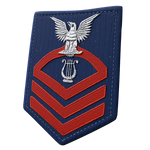
<div id="achievement" style="min-height:180px;">[[File:PCZC223 AA Musician.png|150px|left|link=]] '''Musician'''<br><br>The rank of Musician was established in the U.S. Navy in 1838, but the modern rating only appeared in 1944. The Musician's duties include keeping, if necessary, of the crew's morale and participation in all the numerous rituals and solemn ceremonies taking place on a ship.<br><br>The sleeve insignia of the Musicians was introduced in 1886, the lyre became the rank's emblem. The patch is worn on the left sleeve.<br><br></div> | <div id="achievement" style="min-height:180px;">[[File:PCZC223 AA Musician.png|150px|left|link=]] '''Musician'''<br><br>The rank of Musician was established in the U.S. Navy in 1838, but the modern rating only appeared in 1944. The Musician's duties include keeping, if necessary, of the crew's morale and participation in all the numerous rituals and solemn ceremonies taking place on a ship.<br><br>The sleeve insignia of the Musicians was introduced in 1886, the lyre became the rank's emblem. The patch is worn on the left sleeve.<br><br></div> | ||
==="Other Ratings" Collection — Reward=== | ==="Other Ratings" Collection — Reward=== | ||
Completing this sub-collection provides the following rewards: | Completing this sub-collection provides the following rewards: | ||
| Line 268: | Line 214: | ||
! style="width: 100px; vertical-align:middle" | Icon | ! style="width: 100px; vertical-align:middle" | Icon | ||
! style="width: 100px; vertical-align:middle" | Type | ! style="width: 100px; vertical-align:middle" | Type | ||
|- | |- | ||
| style="vertical-align:middle;" | [[File:Reward_unlock_camo.png|frameless|center|link=]] | | style="vertical-align:middle;" | [[File:Reward_unlock_camo.png|frameless|center|link=]] | ||
| style="vertical-align:middle;" | ''' | | style="vertical-align:middle;" | '''Patches<br> Stripes<br>Tiles<br>Lines''' | ||
|} | |} | ||
</div></div></div> | |||
==Overall Reward== | ==Overall Reward== | ||
Completing the entire collection provides the following rewards: | Completing the entire collection provides the following rewards: | ||
Latest revision as of 02:14, 4 August 2026

|
American CruisersThis collection is available once players complete the final task of Mission 1 of the "Hit Hard! Hit Fast! Hit Often!" campaign. Earning the first collection item via completion of the campaign task or purchase of special containers from the Wargaming store unlocks the ability for collection items to drop from regular Containers earned through daily missions. |
"Cruisers, 1900s - 1930s"


"Main Battery" Collection
"Anti-Aircraft Guns" Collection
"Highest Awards" Collection


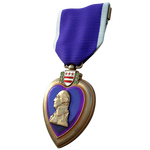
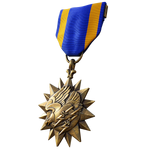
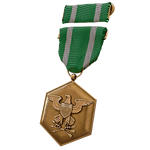
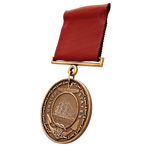
"Orders and Medals" Collection
"Combat Ratings" Collection
"Other Ratings" Collection
Overall Reward
Completing the entire collection provides the following rewards:
| Icon | Name | Notes |
|---|---|---|

|
Freedom | Alternate permanent camouflage for Cleveland. |
Category:
