User:Orca prpr/sandbox
No edit summary |
No edit summary |
||
| (4 intermediate revisions by the same user not shown) | |||
| Line 1: | Line 1: | ||
{{collitem|PCZC728_May_Day_1_2}} | |||
{{Collitem|PCZC1188_HUNT_BISMARCK_1_1}} | {{Collitem|PCZC1188_HUNT_BISMARCK_1_1}} | ||
{{Collitem|PCZC1088_Azurlane_8_1_1}} | |||
{{Collitem|PCZC919_STAR_TREK_1_1}} | |||
{{Collitem|PCZC919_STAR_TREK_1_1|name=123|desc=123345}} | |||
{{#shipstr:IDS_DESCRIPTION_PCZA045_CMW_LEGENDARY}} | |||
Latest revision as of 20:53, 27 July 2026
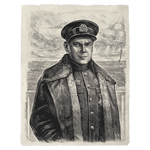
Gurin, Anton Iosifovich (1910–1962) was a Soviet Navy rear admiral. He joined the Navy in 1928. After graduating from the Naval Academy, he served on submarines for several years. In 1938, he was given command of destroyer Gremyashchy. A year later, he and his ship were reassigned from the Black Sea to the North Sea.
Over the course of World War II, Anton Gurin served within the Northern Fleet, which acquired special strategic importance with the launch of the Arctic convoys. Starting as Gremyashchy's commander and later becoming commander of the First Destroyer Division, he conducted more than 100 combat missions, raided enemy communication lines, and provided artillery fire support for Soviet Army operations. Anton Gurin participated in escorting several dozen Allied convoys and stood up to countless attacks from German aviation and submarines—acts of bravery that brought him the American Navy Cross.
In July 1945, he was awarded the "Hero of the Soviet Union" title for his legendary deeds in action.In the early hours of May 21, 1941, German battleship Bismarck and heavy cruiser Prinz Eugen slipped out of Grimstadfjord near Bergen, Norway, to begin Operation Rheinübung. Their mission was to break into the North Atlantic and attack Allied merchant shipping.
Maintaining strict radio silence and screened by low clouds, rain, and mist, the ships moved through the fjords and then north along the Norwegian coast. As they steered toward the Denmark Strait, they encountered worsening weather, fog, and drifting ice, which reduced visibility while they pressed on toward their fateful encounter with HMS Hood.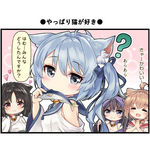
Asashio: Nom nom... Hm?
Arashio: Quite adorable.
Michishio: Aww! She's so cute!John Augustine Collins was a prominent Royal Australian Navy officer who served during both World Wars. A member of the first intake at the Royal Australian Naval College, he graduated in 1917 and was posted to the British Grand Fleet, serving on HMS Canada. Between the wars, he carved out a brilliant career in the Royal Australian Navy and proved to be a promising naval officer.
With the outbreak of World War II, Collins took command of HMAS Sydney and was sent to the Mediterranean. One of his most notable actions in that theater was sinking the Italian cruiser Bartolomeo Colleoni during the Battle of Cape Spada in July 1940. For this victory, Collins was appointed Companion of the Order of the Bath.
Later, he rose to senior operational command. In 1944, Collins was transferred to HMAS Australia as a task force commander. On October 21, 1944, HMAS Australia was struck in one of the first kamikaze attacks. The blast killed the captain and other officers and seriously wounded Collins. He returned to duty in 1945 and was present in Tokyo Bay for the Japanese surrender ceremony.


