Ship:Vive La France Collection
imported>Franz_von_Suppe:eu No edit summary |
No edit summary |
||
| Line 1: | Line 1: | ||
__NOEDITSECTION__ | __NOEDITSECTION__ | ||
[[File: | {| class="gw-frame-1" style="width:100%;" | ||
| style="padding: 8px; width:150px;" | | |||
[[File:collection_token_PCZA008_Vivalafrance.png|140px|left]] | |||
<br> | |||
| style="vertical-align:middle; padding: 15px" | | |||
==<big><big><big>Vive La France</big></big></big>== | |||
The French Navy traces its origins to the early 17th century. It was established through the efforts of the eminent Cardinal Richelieu and includes many glorious and dramatic events. For several centuries, it stood strong as one of the world's most powerful maritime forces. French shipbuilding contributed greatly to world engineering heritage by offering a large variety of ingenious discoveries and design concepts. | The French Navy traces its origins to the early 17th century. It was established through the efforts of the eminent Cardinal Richelieu and includes many glorious and dramatic events. For several centuries, it stood strong as one of the world's most powerful maritime forces. French shipbuilding contributed greatly to world engineering heritage by offering a large variety of ingenious discoveries and design concepts. | ||
<br><br> | |||
The crowning of French shipbuilding, the reflection of the country's proud history and its naval power were all manifested in French battleships. During World War II, alongside other combat units of the French Navy, these powerful warships accomplished a lot of important missions, facing tough challenges and suffering significant losses. | The crowning of French shipbuilding, the reflection of the country's proud history and its naval power were all manifested in French battleships. During World War II, alongside other combat units of the French Navy, these powerful warships accomplished a lot of important missions, facing tough challenges and suffering significant losses. | ||
<br><br? | |||
This collection became available during the celebrations surrounding the introduction of the French battleship line beginning on 7 February 2018. | |||
|} | |||
== | </div></div></div> | ||
<div class="b-popup"><div class="b-popup_head js-tech-nav_head"><div><h2>"Ships" Collection</h2></div><span class="b-tech-nav_arrow"></span></div><div class="b-popup_content" style="display: none;"><div> | |||
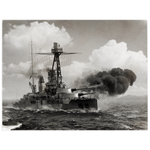
<div id="achievement" style="min-height:180px;">[[File:PCZC158 VivaLaFrance Courbet.png|150px|left|link=]] '''Battleship ''Courbet'' Near Cherbourg, June 1940'''<br><br>''Courbet'' entered service in 1913 as the lead ship in the first series of French dreadnoughts. The ship was named in honor of Amédée Courbet (1827-1885), a French admiral who won a series of important naval victories during the Sino-French War of 1884-1885 and died of cholera soon after.<br><br>During World War I, ''Courbet'' participated in battles in the Mediterranean as the flagship of the French fleet. In the 1920–1930s, the ship underwent several upgrades. The outbreak of World War II found this veteran ship in the north of France. In June 1940, ''Courbet'' rained the full power of her main battery down on the German motorized regiments approaching Cherbourg. In 1941, while serving in the Free French Naval Forces, the ship participated in the defense of Portsmouth, England, against the Luftwaffe attacks. In 1944, she was disarmed, and her hull was used as a breakwater during the construction of a temporary harbor for landing Allied troops in Normandy.</div> | <div id="achievement" style="min-height:180px;">[[File:PCZC158 VivaLaFrance Courbet.png|150px|left|link=]] '''Battleship ''Courbet'' Near Cherbourg, June 1940'''<br><br>''Courbet'' entered service in 1913 as the lead ship in the first series of French dreadnoughts. The ship was named in honor of Amédée Courbet (1827-1885), a French admiral who won a series of important naval victories during the Sino-French War of 1884-1885 and died of cholera soon after.<br><br>During World War I, ''Courbet'' participated in battles in the Mediterranean as the flagship of the French fleet. In the 1920–1930s, the ship underwent several upgrades. The outbreak of World War II found this veteran ship in the north of France. In June 1940, ''Courbet'' rained the full power of her main battery down on the German motorized regiments approaching Cherbourg. In 1941, while serving in the Free French Naval Forces, the ship participated in the defense of Portsmouth, England, against the Luftwaffe attacks. In 1944, she was disarmed, and her hull was used as a breakwater during the construction of a temporary harbor for landing Allied troops in Normandy.</div> | ||
| Line 21: | Line 27: | ||
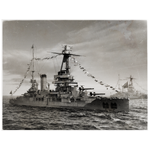
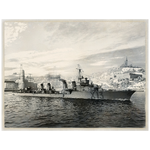
<div id="achievement" style="min-height:180px;">[[File:PCZC163 VivaLaFrance Aigle.png|150px|left|link=]] '''Large Destroyer ''Aigle'' in Marseille, March 1940'''<br><br>Large destroyer ''Aigle'', which was built at the dockyard in Dunkirk, joined the Naval Forces in 1932. The large destroyer (''contre-torpilleur'') type of warship, which combined the characteristics of destroyers and cruisers, was used only by France. Other countries relied on flotilla leaders instead. But unlike leaders, the French ships were designed to drive off opposing destroyers rather than lead destroyer flotillas. <br><br>During World War II, ''Aigle'' was engaged in operations to transport gold bars several times. In November 1939, she escorted Force "Z" ships (battleship ''Lorraine'' and two cruisers of the ''La Galissonnière'' class) until they reached the Atlantic. In March–April 1940, ''Aigle'' provided cover and, later, escorted the ships of Force "X" back. Besides that, ''Aigle'' was regularly deployed to escort convoys with troops, heading from the North African ports to Marseille. The last combat operation in which the large destroyer participated was a raid on Genoa, where she had to fend off the attacks of Italian torpedo boats.</div> | <div id="achievement" style="min-height:180px;">[[File:PCZC163 VivaLaFrance Aigle.png|150px|left|link=]] '''Large Destroyer ''Aigle'' in Marseille, March 1940'''<br><br>Large destroyer ''Aigle'', which was built at the dockyard in Dunkirk, joined the Naval Forces in 1932. The large destroyer (''contre-torpilleur'') type of warship, which combined the characteristics of destroyers and cruisers, was used only by France. Other countries relied on flotilla leaders instead. But unlike leaders, the French ships were designed to drive off opposing destroyers rather than lead destroyer flotillas. <br><br>During World War II, ''Aigle'' was engaged in operations to transport gold bars several times. In November 1939, she escorted Force "Z" ships (battleship ''Lorraine'' and two cruisers of the ''La Galissonnière'' class) until they reached the Atlantic. In March–April 1940, ''Aigle'' provided cover and, later, escorted the ships of Force "X" back. Besides that, ''Aigle'' was regularly deployed to escort convoys with troops, heading from the North African ports to Marseille. The last combat operation in which the large destroyer participated was a raid on Genoa, where she had to fend off the attacks of Italian torpedo boats.</div> | ||
==="Ships" Collection — Reward=== | ==="Ships" Collection — Reward=== | ||
Completing this sub-collection provides the following rewards:<br> | Completing this sub-collection provides the following rewards:<br> | ||
| Line 30: | Line 36: | ||
! style="width: 100px; vertical-align:middle" | Icon | ! style="width: 100px; vertical-align:middle" | Icon | ||
! style="width: 100px; vertical-align:middle" | Type | ! style="width: 100px; vertical-align:middle" | Type | ||
|- | |- | ||
| style="vertical-align:middle;" | [[File:PCEC045 Vive la France.png|frameless|center|link=]] | | style="vertical-align:middle;" | [[File:PCEC045 Vive la France.png|frameless|center|link=]] | ||
| style="vertical-align:middle;" | '''Revolutionary''' | | style="vertical-align:middle;" | '''Revolutionary''' | ||
|} | |} | ||
</div></div></div> | |||
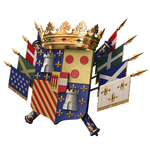
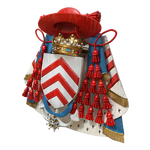
<div class="b-popup"><div class="b-popup_head js-tech-nav_head"><div><h2>"Badges and Coats of Arms" Collection</h2></div><span class="b-tech-nav_arrow"></span></div><div class="b-popup_content" style="display: none;"><div><div id="achievement" style="min-height:180px;">[[File:PCZC164 VivaLaFrance Turenn.png|150px|left|link=]] '''Coat of Arms of Turenne, Marshal of France'''<br><br>Henri de La Tour d'Auvergne, Vicomte de Turenne (1611–1675) is one of the most prominent French generals. He joined the army as a private during the Thirty Years' War but displayed such daring and skill that he rose meteorically in rank, becoming a Marshal of France at 33. Turenne's innovative approach based on fearless maneuvering on the battlefield and concentrating troops along the main sector of the front helped him secure several brilliant victories during the wars with Spain and Holland. The glorious Marshall's life was taken by an enemy cannonball in his next battle. <br><br>The French Navy paid their respects to Turenne by assigning his name to two large battle units—a 100-gun ship-of-the-line launched in 1854 and an ironclad that entered service in 1882. Early in the 20th century, France was considering a project to build an "all-big-gun" battleship as a next step in the evolution of the ''Danton''-class pre-dreadnought battleships, also to be named after one of the most prominent figures in French history.</div> | |||
<div id="achievement" style="min-height:180px;">[[File:PCZC164 VivaLaFrance Turenn.png|150px|left|link=]] '''Coat of Arms of Turenne, Marshal of France'''<br><br>Henri de La Tour d'Auvergne, Vicomte de Turenne (1611–1675) is one of the most prominent French generals. He joined the army as a private during the Thirty Years' War but displayed such daring and skill that he rose meteorically in rank, becoming a Marshal of France at 33. Turenne's innovative approach based on fearless maneuvering on the battlefield and concentrating troops along the main sector of the front helped him secure several brilliant victories during the wars with Spain and Holland. The glorious Marshall's life was taken by an enemy cannonball in his next battle. <br><br>The French Navy paid their respects to Turenne by assigning his name to two large battle units—a 100-gun ship-of-the-line launched in 1854 and an ironclad that entered service in 1882. Early in the 20th century, France was considering a project to build an "all-big-gun" battleship as a next step in the evolution of the ''Danton''-class pre-dreadnought battleships, also to be named after one of the most prominent figures in French history.</div> | |||
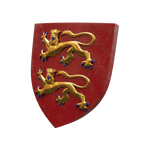
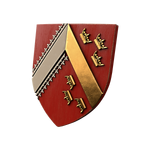
<div id="achievement" style="min-height:180px;">[[File:PCZC165 VivaLaFrance Normand.png|150px|left|link=]] '''Coat of Arms of Normandy'''<br><br>The lead ship in a series of French battleships which superseded the ''Bretagne''-class ships was named after Normandy, a historical province in the north of France housing two of the country's largest sea ports, Rouen and Le Havre. As a result of a centuries-long rivalry between France and Great Britain over possession of this province, Normandy's Coat of Arms is but a variation of the Royal Coat of Arms of the United Kingdom. <br><br>The first warship to be named ''Normandie'' was a ''Gloire''-class ironclad that entered service in 1862. In 1913-1914, five ''Normandie''-class super-dreadnought battleships were laid down but their construction was ceased due to the outbreak of World War I. Only ''Béarn'', the last ship in the series, was completed as an aircraft carrier.</div> | <div id="achievement" style="min-height:180px;">[[File:PCZC165 VivaLaFrance Normand.png|150px|left|link=]] '''Coat of Arms of Normandy'''<br><br>The lead ship in a series of French battleships which superseded the ''Bretagne''-class ships was named after Normandy, a historical province in the north of France housing two of the country's largest sea ports, Rouen and Le Havre. As a result of a centuries-long rivalry between France and Great Britain over possession of this province, Normandy's Coat of Arms is but a variation of the Royal Coat of Arms of the United Kingdom. <br><br>The first warship to be named ''Normandie'' was a ''Gloire''-class ironclad that entered service in 1862. In 1913-1914, five ''Normandie''-class super-dreadnought battleships were laid down but their construction was ceased due to the outbreak of World War I. Only ''Béarn'', the last ship in the series, was completed as an aircraft carrier.</div> | ||
| Line 55: | Line 52: | ||
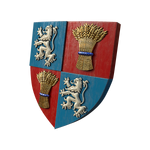
<div id="achievement" style="min-height:180px;">[[File:PCZC169 VivaLaFrance Gasconha.png|150px|left|link=]] '''Coat of Arms of Gascogne'''<br><br>In 1938, driven by further aggravation of the international situation, the French government decided to build a second pair of ''Richelieu''-class battleships. However, significant changes were made to the project designs at the development stage with the last ship carrying the name of a historical province in the south-west of France—Gascogne—designed almost from scratch. <br><br>''Gascogne''<nowiki>'</nowiki>s main difference from ''Richelieu'' was a more conventional placement of main battery turrets—at the fore and aft ends of the ship. Another important change was the shift of the propulsion unit closer to the ship's fore end and reinforcement of her AA defenses by increasing the number of 100 mm and 37 mm guns. The keel-laying that had been postponed several times was ultimately to take place in the summer of 1940. But after France withdrew from the war in June of the same year, preparations for the construction of the battleship were ceased. The preceding warship ''Gascogne'', one in a series of ''Normandie''-class battleships, can hardly boast a more fortunate destiny. Laid down in 1913 and still under construction, she was decommissioned for scrap.</div> | <div id="achievement" style="min-height:180px;">[[File:PCZC169 VivaLaFrance Gasconha.png|150px|left|link=]] '''Coat of Arms of Gascogne'''<br><br>In 1938, driven by further aggravation of the international situation, the French government decided to build a second pair of ''Richelieu''-class battleships. However, significant changes were made to the project designs at the development stage with the last ship carrying the name of a historical province in the south-west of France—Gascogne—designed almost from scratch. <br><br>''Gascogne''<nowiki>'</nowiki>s main difference from ''Richelieu'' was a more conventional placement of main battery turrets—at the fore and aft ends of the ship. Another important change was the shift of the propulsion unit closer to the ship's fore end and reinforcement of her AA defenses by increasing the number of 100 mm and 37 mm guns. The keel-laying that had been postponed several times was ultimately to take place in the summer of 1940. But after France withdrew from the war in June of the same year, preparations for the construction of the battleship were ceased. The preceding warship ''Gascogne'', one in a series of ''Normandie''-class battleships, can hardly boast a more fortunate destiny. Laid down in 1913 and still under construction, she was decommissioned for scrap.</div> | ||
==="Badges and Coats of Arms" Collection — Reward=== | ==="Badges and Coats of Arms" Collection — Reward=== | ||
Completing this sub-collection provides the following rewards:<br> | Completing this sub-collection provides the following rewards:<br> | ||
| Line 63: | Line 60: | ||
! style="width: 100px; vertical-align:middle" | Icon | ! style="width: 100px; vertical-align:middle" | Icon | ||
! style="width: 100px; vertical-align:middle" | Type | ! style="width: 100px; vertical-align:middle" | Type | ||
|- | |- | ||
| style="vertical-align:middle;" | [[Image:061_17.png|frameless|center|link=]] | | style="vertical-align:middle;" | [[Image:061_17.png|frameless|center|link=]] | ||
| style="vertical-align:middle;" | '''Valentine's 2017''' | | style="vertical-align:middle;" | '''Valentine's 2017''' | ||
|} | |} | ||
</div></div></div> | |||
<div class="b-popup"><div class="b-popup_head js-tech-nav_head"><div><h2>"Armaments" Collection</h2></div><span class="b-tech-nav_arrow"></span></div><div class="b-popup_content" style="display: none;"><div> | |||
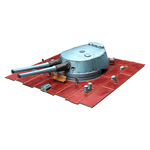
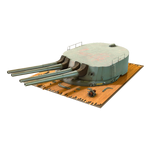
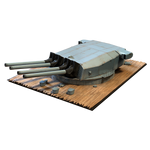
<div id="achievement" style="min-height:180px;">[[File:PCZC170 VivaLaFrance 305mmgun.png|150px|left|link=]] '''305mm Twin Turret'''<br><br>In 1910–1911, specially for the first French dreadnoughts of the Courbet class, a new 305 mm twin turret was developed. The main advantage of the new construction, which distinguished it from previous ones, was inclined armored plates which turned out to be more durable. However, the guns in the turrets were almost the same as those mounted on the last French pre-dreadnought battleships of the ''Danton'' class. <br><br>The turrets had up to 290 mm of armor and the loading gear was designed to fire up to two 432 kg AP shells per minute. The main disadvantage of ''Courbet's'' turrets was a small gun elevation angle (12 degrees only), which significantly decreased the ship's firing range. That shortcoming was fixed only during a major ship refit of 1922–1924 when the angle was increased to 23 degrees.</div> | <div id="achievement" style="min-height:180px;">[[File:PCZC170 VivaLaFrance 305mmgun.png|150px|left|link=]] '''305mm Twin Turret'''<br><br>In 1910–1911, specially for the first French dreadnoughts of the Courbet class, a new 305 mm twin turret was developed. The main advantage of the new construction, which distinguished it from previous ones, was inclined armored plates which turned out to be more durable. However, the guns in the turrets were almost the same as those mounted on the last French pre-dreadnought battleships of the ''Danton'' class. <br><br>The turrets had up to 290 mm of armor and the loading gear was designed to fire up to two 432 kg AP shells per minute. The main disadvantage of ''Courbet's'' turrets was a small gun elevation angle (12 degrees only), which significantly decreased the ship's firing range. That shortcoming was fixed only during a major ship refit of 1922–1924 when the angle was increased to 23 degrees.</div> | ||
| Line 90: | Line 81: | ||
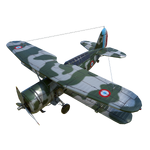
<div id="achievement" style="min-height:180px;">[[File:PCZC175 VivaLaFrance Voughtv156f.png|150px|left|link=]] '''Bomber Vought V-156-F'''<br><br>Produced from 1936, the ''Vought SB2U Vindicator'' was one of the first American carrier-based monoplane bombers. On the threshold of a war with Germany, in 1939, France placed an order in the U.S. requesting 40 such aircraft to be built for the French Naval Aviation. The bombers were designated "Vought V–156–F" and carried predominantly French-made equipment and armament. <br><br>A certain number of French ''Vindicators'' were assigned to the aircraft carrier Béarn. Shortly after, this veteran low-speed ship was turned into a mere aircraft carrying vessel, and all ''Vought V–156–F's'' were relocated to onshore bases. In May–June 1940, the bombers were actively involved in land front operations against Germany and Italy, and nearly all of them were lost.</div> | <div id="achievement" style="min-height:180px;">[[File:PCZC175 VivaLaFrance Voughtv156f.png|150px|left|link=]] '''Bomber Vought V-156-F'''<br><br>Produced from 1936, the ''Vought SB2U Vindicator'' was one of the first American carrier-based monoplane bombers. On the threshold of a war with Germany, in 1939, France placed an order in the U.S. requesting 40 such aircraft to be built for the French Naval Aviation. The bombers were designated "Vought V–156–F" and carried predominantly French-made equipment and armament. <br><br>A certain number of French ''Vindicators'' were assigned to the aircraft carrier Béarn. Shortly after, this veteran low-speed ship was turned into a mere aircraft carrying vessel, and all ''Vought V–156–F's'' were relocated to onshore bases. In May–June 1940, the bombers were actively involved in land front operations against Germany and Italy, and nearly all of them were lost.</div> | ||
==="Armaments" Collection — Reward=== | ==="Armaments" Collection — Reward=== | ||
Completing this sub-collection provides the following rewards:<br> | Completing this sub-collection provides the following rewards:<br> | ||
| Line 98: | Line 89: | ||
! style="width: 100px; vertical-align:middle" | Icon | ! style="width: 100px; vertical-align:middle" | Icon | ||
! style="width: 100px; vertical-align:middle" | Type | ! style="width: 100px; vertical-align:middle" | Type | ||
|- | |- | ||
| style="vertical-align:middle;" | [[Image:PCEC023_Camo_St_Patrick.png|frameless|center|link=]] | | style="vertical-align:middle;" | [[Image:PCEC023_Camo_St_Patrick.png|frameless|center|link=]] | ||
| style="vertical-align:middle;" | '''Lá Fhéile Pádraig''' | | style="vertical-align:middle;" | '''Lá Fhéile Pádraig''' | ||
. | |||
|} | |} | ||
</div></div></div> | |||
==Overall Reward== | ==Overall Reward== | ||
Completing the entire collection provides the following rewards: | Completing the entire collection provides the following rewards: | ||
| Line 119: | Line 106: | ||
| style="vertical-align:middle;" | [[Image:PCEE181 Viva La France Flag.png|frameless|center|link=]] | | style="vertical-align:middle;" | [[Image:PCEE181 Viva La France Flag.png|frameless|center|link=]] | ||
| style="vertical-align:middle;" | '''Vive la France Flag''' | | style="vertical-align:middle;" | '''Vive la France Flag''' | ||
| style="vertical-align:middle;" | | | style="vertical-align:middle;" | ''Good deeds are rewarded'' | ||
|} | |} | ||
Revision as of 02:42, 4 August 2026

|
Vive La FranceThe French Navy traces its origins to the early 17th century. It was established through the efforts of the eminent Cardinal Richelieu and includes many glorious and dramatic events. For several centuries, it stood strong as one of the world's most powerful maritime forces. French shipbuilding contributed greatly to world engineering heritage by offering a large variety of ingenious discoveries and design concepts.
|
"Ships" Collection


"Badges and Coats of Arms" Collection

"Armaments" Collection

Overall Reward
Completing the entire collection provides the following rewards:
| Icon | Name | Notes |
|---|---|---|
 |
Vive la France Flag | Good deeds are rewarded |
| Nation | Commander Icon and Name |
Unique Traits | |
|---|---|---|---|

|
 Jean-Jacques Honoré  Bougainville with 10 skill points Bougainville with 10 skill points
|

|
Adrenaline Rush (enhanced skill) changes the reload time of all types of armament -0.25% and the continuous AA damage +0.25% for each 1% of HP lost (normally -0.2%/+0.2%). |

|
Grease the Gears (enhanced skill) improves main battery turret rotation speed:
| ||
See also Special Commanders.
