Ship:39 45 Chronicles Collection

|
Contents39-45 ChroniclesWorld War II, the largest and deadliest conflict in history, involved millions of lives across the globe. The '39-'45 Chronicles collection captures the epic, devastating, and defining moments of the war, commemorating the price humanity paid in pursuit of a world at peace. |
1939-1941 Collection
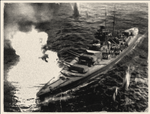
German battleship Bismarck, launched in 1939, was one of the most formidable naval assets during World War II and posed a grave threat to Allied shipping and naval operations. The German Navy planned to use Bismarck in raiding operations in the Atlantic to disrupt Allied maritime supply lines and engage enemy vessels.
In May 1941, Bismarck embarked on her infamous raiding mission across the North Atlantic, quickly sinking British battlecruiser HMS Hood. This engagement not only showcased Bismarck's firepower but also instilled fear among Allied naval commanders. It highlighted the battleship's potential to wreak havoc in shipping routes vital for sustaining the war effort.
The threat posed by Bismarck extended beyond her immediate capabilities; it significantly strained Allied naval resources and strategy. The Royal Navy was compelled to allocate numerous ships to hunt down and neutralize Bismarck, diverting attention and forces from other critical theaters of war. The intense pursuit culminated in the battleship's eventual sinking on May 27, 1941
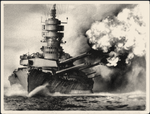
The Battle of Cape Matapan, which occurred March 27-29, 1941, was a significant naval engagment in the Mediterranean during World War II, primarily pitting the British Royal Navy against the Italian Regia Marina. The battle combined surface engagements with air attacks, resulting in a decisive victory for the Allies. One of the greatest Regia Marina assets involved in the Battle of Cape Matapan was battleship Vittorio Veneto, Admiral Angelo Lachino's flagship.
During the engagement, Vittorio Veneto attempted to confront the British cruisers but became a prime target for Allied aircraft and ships. Using superior intelligence and coordination, the British naval forces inflicted significant damage on the Italian fleet, sinking three heavy cruisers and two destroyers. Vittorio Veneto was also damaged by an aerial torpedo, causing flooding, though the damage was limited. Heavy casualties inflicted on the Regia Marina forces during the Battle of Cape Matapan led to a more cautious approach, and the fleet didn't return to full-scale naval operations until a year later, in 1942
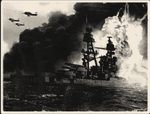
The Japanese attack on Pearl Harbor on December 7, 1941, marked a pivotal moment in World War II, prompting the formal entry of the United States into the conflict. Coordinated by Admiral Isoroku Yamamoto, the surprise military strike involved six aircraft carriers that launched two waves of aircraft against the U.S. Pacific Fleet stationed at Pearl Harbor, Hawaii, among the numerous battleships targeted, USS Arizona suffered the most catastrophic damage. A direct hit by a 1,760-pound bomb caused a massive explosion, and the ship sank with 1,177 of her crew members, making it one of the deadliest events of the attack.
The destruction of USS Arizona became a symbol of the attack and its profound impact on American society. The ship's wreckage remains submerged at Pearl Harbor and is now a memorial to those who lost their lives that day, standing as a testament to resilience and sacrifice of U.S. Navy servicemen.
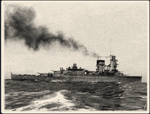
Allied forces, composed of Dutch, American, British, and Australian warships, faced off against the Imperial Japanese Navy in a daring attempt to hold the Malay Barrier. This was crucial to maintain control of the region, as the Allies aimed to prevent the Japanese from solidifying their dominance in Southeast Asia. Despite their efforts to create a united front, the Allies were ultimately outmaneuvered and outgunned by the more experienced and coordinated Imperial Japanese Navy.
Dutch light cruiser De Ruyter served as flagship of the Allied force during the Battle of the Java Sea, and during the course of the engagement, she sustained heavy damage from Japanese gunfire and torpedoes. De Ruyter was eventually sunk, resulting in significant personnel losses and representing a devastating blow to Allied morale in the Pacific Theater. The defeat at the Battle of the Java Sea was indicative of the challenges faced by the Allies in the early months of the Pacific War and marked a decisive victory for Japan, enabling them to further expand their territorial acquisitions in Southeast Asia.
Reward
Completing this sub-collection provides the following reward:
 Robert Adams a commander with 10 skill points.
1942-1943 Collection
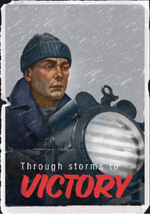
During World War II, signal lamps on Royal Navy warships were primarily operated by signalmen, specially trained personnel responsible for visual communication at sea. They utilized various signaling methods, including signal lamps, to send and receive messages in Morse code, particularly during operations that required radio silence or when visual signals were more effective for close-range communication between ships. Signalmen worked even in the harshest weather conditions, such as during Arctic convoys, to ensure clear and precise communication, which was crucial for coordinating naval operations and maintaining the overall effectiveness of the naval force.
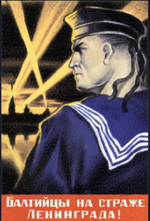
During one of the most dramatic episodes of the Great Patriotic War, the Siege of Leningrad, Soviet Baltic Fleet sailors played a crucial role in the city's desperate defense against the advancing German Army. Though many Baltic Fleet ships were blockaded in Kronstadt and Leningrad, they remained active war assets, providing artillery support, anti-aircraft fire, and vital logistical aid for military operations.
Sailors were frequently redeployed from ship to shore, forming elite naval infantry units that fought as shock troops on the most dangerous sectors of the front. Clad in their iconic black uniforms, they distinguished themselves in brutal close-quarters combat. From operating the guns of battleship Oktyabrskaya Revolutsiya (October Revolution) to storming enemy positions during sudden landings, Baltic Fleet personnel combined the resilience of seamen with the ferocity of frontline soldiers, becoming one of the city's most steadfast lines of defense.
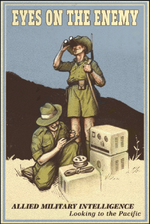
During the Guadalcanal campaign in World War II, Allied coastwatchers played a critical role in gathering intelligence and providing early warning of Japanese naval movements in the Solomon Islands. These teams, comprising military personnel, local civilians, and indigenous islanders, were strategically positioned along coastlines and at key observation points to monitor enemy activities. With limited communication technology, the coastwatchers utilized their knowledge of the terrain and local context to report on troop movements, ship landings, and approaching aircraft-effectively serving as the eyes and ears of Allied forces.
The information relayed by coastwatchers was invaluable. It enabled Allied commanders to make informed tactical decisions and stage ambushes against Japanese forces attempting to reinforce or resupply their troops. Their contributions not only created a vital intelligence network crucial to the success of the Guadalcanal campaign, but also fostered strong relationships between the Allies and local populations, who often assisted in these efforts.
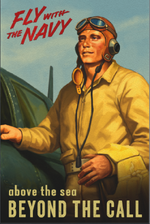
World War II brought a new type of naval battle-carrier battles, in which ships of both sides remained out of the engagement range of artillery fire. Instead, carrier aircraft-torpedo and dive bombers-delivered strikes against enemy ships, with fighters providing necessary cover from enemy aircraft. Carrier battles were a significant part of the Pacific campaign during World War II. One such engagement was the Battle of Santa Cruz on October 26, 1942. U.S. Navy carrier pilots faced intense combat as they engaged the Imperial Japanese Navy in a critical conflict within the Solomon Islands campaign. This naval battle was marked by fierce aerial dogfights and coordinated strikes against Japanese aircraft carriers. U.S. Navy pilots, flying aircraft like Dauntless dive bombers and Wildcat fighters, ventured into combat to gain air superiority and protect their own fleet from enemy attacks. Despite suffering significant losses, U.S. carrier aviation played a crucial role in the battle. The experience gained during the Battle of Santa Cruz significantly influenced U.S. naval aviation tactics and training. shaping the evolution of carrier operations for the remainder of the Pacific War.
Reward
Completing this sub-collection provides the following reward:
 +24 hours Warships Premium time
1943-1944 Collection
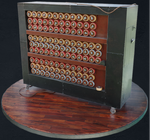
Operation Stonewall was a World War II Allied naval and air campaign conducted in late 1943 to intercept and destroy German blockade runners attempting to transport vital resources from the Far East to Nazi-occupied Europe. The operation took place in the Atlantic, particularly near the Bay of Biscay, where British, American, and Free French naval forces, supported by RAF and USAAF aircraft, hunted down German merchant vessels and their escorts. The operation was highly successful, leading to the sinking of several blockade runners and further crippling Germany's ability to sustain its war effort with essential supplies like rubber, tin, and tungsten.
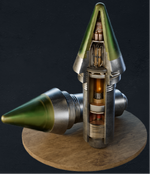
The Battle of the Philippine Sea, fought June 19–20, 1944, was the last and largest of the five major carrier battles between the U.S. Navy and Imperial Japanese Navy. It's also known for the severely disproportionate loss of Japanese aircraft: the U.S. lost 123 aircraft, while Japan lost between 550 and 645. Key factors contributing to the Allies' success included highly trained U.S. carrier pilots, advanced air tactics, and cutting-edge weapon technology used in anti-aircraft ship defense-the proximity fuse.
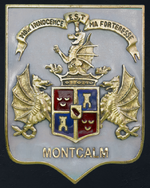
French cruiser Montcalm played a prominent role in Operation Dragoon, the Allied invasion of southern France on August 15, 1944. As part of the naval bombardment force, Montcalm provided heavy artillery support to soften German coastal defenses ahead of the amphibious landings. Armed with powerful 152 mm (6-inch) guns, the cruiser targeted enemy fortifications, bunkers, and strong points along the French Riviera. Her firepower helped clear the way for Allied troops, particularly aiding the landings at Saint-Tropez.
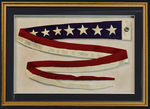
USS San Diego (CL-53) was a United States Navy Atlanta-class light cruiser that served with distinction during World War II. Commissioned in 1942, she played a vital role in the Pacific Theater, providing anti-aircraft defense for carrier task forces and participating in key operations, including the Solomon Islands campaign and battles around the Philippines and Okinawa. San Diego earned 18 battle stars, making her one of the most decorated U.S. ships of the war.
Reward
Completing this sub-collection provides the following reward:
 Triumphant Permanent camouflage for Iowa
1944-1945 Collection
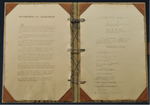
The Japanese Instrument of Surrender, formally signed on September 2, 1945, aboard USS Missouri in Tokyo Bay, marked the official end of World War II. This pivotal document concluded Japan's defeat following years of intense conflict in the Pacific Theater. The surrender was signed by Japanese Foreign Minister Mamoru Shigemitsu, representing the Japanese government, and General Yoshijiro Umezu, Chief of Staff of the Imperial Japanese Army. The ceremony was attended by Allied leaders, including General Douglas MacArthur, who oversaw the proceedings as Supreme Commander for the Allied Powers, along with representatives from various nations involved in the conflict.
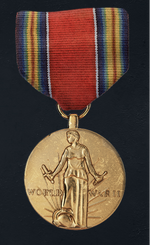
The World War II Victory Medal is a military decoration awarded to the United States Armed Forces members who served on active duty during World War II, from December 7, 1941, through December 31, 1946. Established by an act of Congress on July 6, 1945, the medal represents a unified recognition of the collective efforts and sacrifices made by military personnel in the fight against the Axis powers.
The obverse features a figure of Liberation holding a broken sword in the right hand and a broken blade in the left. On the reverse are the inscriptions, separated by a palm branch: "FREEDOM FROM FEAR AND WANT" and "FREEDOM OF SPEECH AND RELIGION," all within a circle composed of the words "UNITED STATES OF AMERICA 1941–1945." The rainbow on each side of the ribbon is a miniature of the pattern used in the World War I Victory Medal.
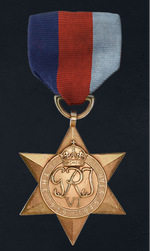
The 1939–1945 Star is a military decoration awarded to members of the British Armed Forces and those of the Commonwealth nations for service during World War II. Instituted on December 8, 1943, the medal recognizes individuals who served in designated operational theaters, with eligibility spanning from September 3, 1939, when the United Kingdom entered the war, to September 2, 1945, the date of Japan's formal surrender.
The decoration features a striking six-pointed star with rays emanating from its center, enclosing a circular medallion bearing the crown and inscribed with "The 1939–1945 Star" on a ribbon of Navy blue, Army red, and Air Force blue. The award was granted not only to those who took part in combat roles but also to individuals who contributed to the support and supply efforts critical to the war.
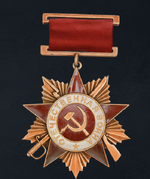
The Order of the Great Patriotic War was a prestigious military decoration awarded by the Soviet Union to recognize the bravery and heroism of soldiers and officers during World War II, specifically on the Eastern Front, known in the U.S.S.R. as the Great Patriotic War. Established on May 20, 1942, the order was granted to individuals who demonstrated extraordinary courage, outstanding leadership, and exceptional service in battles against Nazi Germany and its allies.
The order's design featured a red enamel five-pointed star made of silver, with straight rays in the background, overlaid with a crossed saber and Mosin rifle. The background rays were gold for the 1st Class and silver for the 2nd Class. At the center was an emblem depicting the hammer and sickle, surrounded by the inscription "ОТЕЧЕСТВЕННАЯ ВОЙНА" (meaning "Patriotic War" in Russian). Originally, the order was attached to a plain red ribbon similar to the Gold Star award, but from June 1943 onward, it was worn on the right side of the chest without a ribbon.
Reward
Completing this sub-collection provides the following reward:
+24 hours Warships Premium time
Overall Reward
Completing the entire collection provides the following reward:
| Icon | Name | Notes |
|---|---|---|
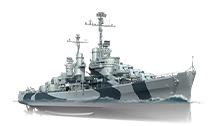 |
San Diego | American premium Tier VIII cruiser USS San Diego, an Atlanta-class cruiser, accompanied aircraft carriers in the Battle of Midway, the Solomon Islands campaign, and the Battle of Guadalcanal during World War II. Along with British and American aircraft carriers, the cruiser participated in the landings on Bougainville and Tarawa, then took part in the landings on Kwajalein, Eniwetok, and the Marshall Islands, as well as in the raids on Truk Island and Wake Island. USS San Diego fought in the first Battle of the Philippine Sea. In 1945, the cruiser participated in attacks on Okinawa and Tokyo. Over the course of the war, the ship was awarded 18 battle stars. |
