Ship:Yamamoto Collection
imported>DrInferno46:sea m Fixed typo. |
No edit summary |
||
| Line 1: | Line 1: | ||
__NOEDITSECTION__ | |||
[[File: | {| class="gw-frame-1" style="width:100%;" | ||
| style="padding: 8px; width:150px;" | | |||
[[File:collection_token_PCZA004_Yamamoto.png|140px|left]] | |||
<br> | |||
| style="vertical-align:middle; padding: 15px" | | |||
==<big><big><big>Yamamoto Isoroku</big></big></big>== | |||
This collection is available once players complete the final task of the "[[Ship:Yamamoto Isoroku|Yamamoto Isoroku]]" campaign. Earning the first collection item via completion of the campaign or purchase of special containers from the Wargaming store unlocks the ability for collection items to drop from regular Containers earned through daily missions. | |||
<br><br> | |||
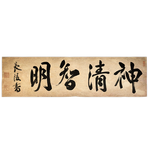
The overall collection is comprised of five sub-collections. Each sub-collection grants a different reward. After obtaining all 40 items in the collection, you will be rewarded with a special Yamamoto Isoroku commemorative flag. | |||
|} | |||
== | </div></div></div> | ||
<div class="b-popup"><div class="b-popup_head js-tech-nav_head"><div><h2> | |||
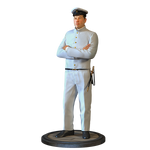
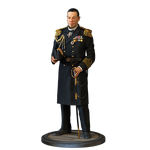
<div id="achievement" style="min-height:180px;">[[File:PCZC051_Yamamoto_KadetSummer_Uniform-big.png|150px|left|link=]] '''Imperial Naval Academy Cadet, Summer Uniform, 1901'''<br><br>In 1901, at 17 years old, Takano Isoroku, the son of a school teacher from an impoverished samurai family, entered the Academy to take naval officer courses after passing the candidate exam with the second best result among other candidates from all over the country. That was the only way for an ambitious young man to leave the country, poverty, and a lack of prospects behind.<br><br>At the Academy on Etajima Island in Hiroshima Bay, a strong Spartan spirit prevailed. Rigorous discipline was best for achieving the leadership potential of the future admiral. His small height didn't prevent him from great achievements in sports and the kendo martial art. His willingness to learn helped Takano Isoroku become one of the Academy's best graduates in November 1904 | "Uniform" Collection</h2></div><span class="b-tech-nav_arrow"></span></div><div class="b-popup_content" style="display: none;"><div> | ||
<div id="achievement" style="min-height:180px;">[[File:PCZC051_Yamamoto_KadetSummer_Uniform-big.png||150px|left|link=]] '''Imperial Naval Academy Cadet, Summer Uniform, 1901'''<br><br>In 1901, at 17 years old, Takano Isoroku, the son of a school teacher from an impoverished samurai family, entered the Academy to take naval officer courses after passing the candidate exam with the second best result among other candidates from all over the country. That was the only way for an ambitious young man to leave the country, poverty, and a lack of prospects behind.<br><br>At the Academy on Etajima Island in Hiroshima Bay, a strong Spartan spirit prevailed. Rigorous discipline was best for achieving the leadership potential of the future admiral. His small height didn't prevent him from great achievements in sports and the kendo martial art. His willingness to learn helped Takano Isoroku become one of the Academy's best graduates in November 1904<br><br></div> | |||
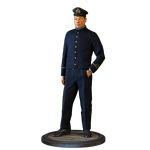
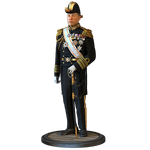
<div id="achievement" style="min-height:180px;">[[File:PCZC052_Yamamoto_Midshipman-big.png|150px|left|link=]] '''Kaigun Shōi Kōhosei (Midshipman), 1905'''<br><br>Takano Isoroku graduated from the Naval Academy in Etajima in November 1904, in the midst of the Russo-Japanese War. Before getting his first assignment as an officer, he needed to serve on a warship for some time. The future naval commander was commissioned on the armored cruiser ''Nisshin'', which was included in the main task force of Admiral Togo.<br><br>Speaking later about his combat debut during the Battle of Tsushima, Yamamoto said: "A shell hit the only operating 8-inch cannon with terrible force. The smoke cloud cast a pall over the front of the ship, and I felt that I was trapped within the whirlwind. I was thrown for several steps. The range tables disappeared from my neck, and two fingers on my left hand hung loosely by just the skin." The future Commander-in-Chief of the Japanese Navy was lucky: if he had lost three fingers instead of two, he would have been dismissed.<br><Br></div> | <div id="achievement" style="min-height:180px;">[[File:PCZC052_Yamamoto_Midshipman-big.png|150px|left|link=]] '''Kaigun Shōi Kōhosei (Midshipman), 1905'''<br><br>Takano Isoroku graduated from the Naval Academy in Etajima in November 1904, in the midst of the Russo-Japanese War. Before getting his first assignment as an officer, he needed to serve on a warship for some time. The future naval commander was commissioned on the armored cruiser ''Nisshin'', which was included in the main task force of Admiral Togo.<br><br>Speaking later about his combat debut during the Battle of Tsushima, Yamamoto said: "A shell hit the only operating 8-inch cannon with terrible force. The smoke cloud cast a pall over the front of the ship, and I felt that I was trapped within the whirlwind. I was thrown for several steps. The range tables disappeared from my neck, and two fingers on my left hand hung loosely by just the skin." The future Commander-in-Chief of the Japanese Navy was lucky: if he had lost three fingers instead of two, he would have been dismissed.<br><Br></div> | ||
| Line 25: | Line 34: | ||
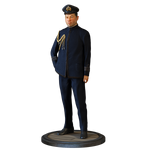
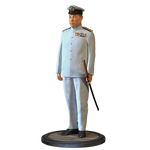
<div id="achievement" style="min-height:180px;">[[File:PCZC058 Yamamoto Kaigun Taisho White-big.png|150px|left|link=]] '''Kaigun-Taishō (Full Admiral), White Uniform, 1943'''<br><br>The order to leave Guadalcanal indicated that the Japanese Navy and Army were defeated. Despite this, Yamamoto did his best to save the Army troops from the military post on the island. The evacuation in February 1943 was brilliantly planned and performed, and was Yamamoto's swan song. Three "Tokyo Expresses" transported more than 10 thousand soldiers under the noses of unsuspecting U.S.A troops, they didn't even notice that the Japanese troops had left Guadalcanal until it was too late. <br><br>On 3 April 1943, a day before his birthday, Yamamoto flew to Rabaul to take command of Operation I-Go, a massive aerial counter-offensive on the key points occupied by the U.S.A. On April 17, Yamamoto gave his last speech, boosting morale of the pilots before his fatal flight to Bougainville. The next day, the aircraft with the Commander-in-Chief of the Combined Fleet was shot down by U.S.A. fighters.</div> | <div id="achievement" style="min-height:180px;">[[File:PCZC058 Yamamoto Kaigun Taisho White-big.png|150px|left|link=]] '''Kaigun-Taishō (Full Admiral), White Uniform, 1943'''<br><br>The order to leave Guadalcanal indicated that the Japanese Navy and Army were defeated. Despite this, Yamamoto did his best to save the Army troops from the military post on the island. The evacuation in February 1943 was brilliantly planned and performed, and was Yamamoto's swan song. Three "Tokyo Expresses" transported more than 10 thousand soldiers under the noses of unsuspecting U.S.A troops, they didn't even notice that the Japanese troops had left Guadalcanal until it was too late. <br><br>On 3 April 1943, a day before his birthday, Yamamoto flew to Rabaul to take command of Operation I-Go, a massive aerial counter-offensive on the key points occupied by the U.S.A. On April 17, Yamamoto gave his last speech, boosting morale of the pilots before his fatal flight to Bougainville. The next day, the aircraft with the Commander-in-Chief of the Combined Fleet was shot down by U.S.A. fighters.</div> | ||
==="Uniform" Collection — Reward=== | ==="Uniform" Collection — Reward=== | ||
Completing this sub-collection provides the following rewards: | Completing this sub-collection provides the following rewards: | ||
| Line 34: | Line 43: | ||
! style="width: 100px; vertical-align:middle" | Icon | ! style="width: 100px; vertical-align:middle" | Icon | ||
! style="width: 100px; vertical-align:middle" | Type | ! style="width: 100px; vertical-align:middle" | Type | ||
|- | |- | ||
| style="vertical-align:middle;" | [[File:Reward_unlock_camo.png|frameless|center|link=]] | | style="vertical-align:middle;" | [[File:Reward_unlock_camo.png|frameless|center|link=]] | ||
| style="vertical-align:middle;" | ''' | | style="vertical-align:middle;" | '''Patches<br> Stripes<br>Tiles<br>Lines''' | ||
|} | |} | ||
</div></div></div> | |||
== | <div class="b-popup"><div class="b-popup_head js-tech-nav_head"><div><h2>"Uniform Items" Collection</h2></div><span class="b-tech-nav_arrow"></span></div><div class="b-popup_content" style="display: none;"><div> | ||
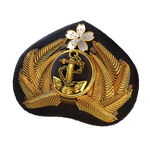
<div id="achievement" style="min-height:180px;">[[File:PCZC059 Yamamoto Kokarda-big.png||150px|left|link=]] '''Cap Badge of the Imperial Navy Officer'''<br><br>A round cap badge with an anchor framed by fronds of cheery tree as an insignia of chief Japanese Navy officers was introduced in 1870. One of its elements was a cherry blossom, an essential attribute of the Japanese Navy rank insignia. Its final form was introduced in 1883 when all officers had to wear the same model of caps.<br<br>Yamamoto Isoroku had such a cap badge for over 37 years, from the moment of his first assignment as an officer in August 1905 till his death as Admiral in April 1943</div> | |||
<div id="achievement" style="min-height:180px;">[[File:PCZC059 Yamamoto Kokarda-big.png|150px|left|link=]] '''Cap Badge of the Imperial Navy Officer'''<br><br>A round cap badge with an anchor framed by fronds of cheery tree as an insignia of chief Japanese Navy officers was introduced in 1870. One of its elements was a cherry blossom, an essential attribute of the Japanese Navy rank insignia. Its final form was introduced in 1883 when all officers had to wear the same model of caps.<br<br>Yamamoto Isoroku had such a cap badge for over 37 years, from the moment of his first assignment as an officer in August 1905 till his death as Admiral in April 1943 | |||
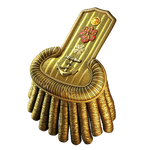
<div id="achievement" style="min-height:180px;">[[File:PCZC060 Yamamoto Epolet-big.png|150px|left|link=]] '''Imperial Japanese Navy Officer Epaulets'''<br><br>In the mid-19th century, epaulets were used only as an element of officer and official dress uniform. In 1873, they were introduced in Japan after the Meiji Restoration, when many spheres were influenced by Europe. The epaulets of the British Royal Navy officers were used as their template.<br><br>As distinguishing features, besides the traditional anchor, images of cherry blossom and paulownia leaves were chosen. They were necessary to wear on dress uniforms after promotion to the first officer rank, including Marshal Admiral. In the late 1930s, epaulets were abolished.</div> | <div id="achievement" style="min-height:180px;">[[File:PCZC060 Yamamoto Epolet-big.png|150px|left|link=]] '''Imperial Japanese Navy Officer Epaulets'''<br><br>In the mid-19th century, epaulets were used only as an element of officer and official dress uniform. In 1873, they were introduced in Japan after the Meiji Restoration, when many spheres were influenced by Europe. The epaulets of the British Royal Navy officers were used as their template.<br><br>As distinguishing features, besides the traditional anchor, images of cherry blossom and paulownia leaves were chosen. They were necessary to wear on dress uniforms after promotion to the first officer rank, including Marshal Admiral. In the late 1930s, epaulets were abolished.</div> | ||
| Line 59: | Line 65: | ||
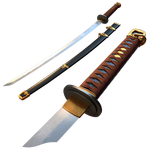
<div id="achievement" style="min-height:180px;">[[File:PCZC066 Yamamoto Katana-big.png|150px|left|link=]] '''Imperial Japanese Navy Officer's Sword, 1930'''<br><br>In 1937, sabers of the European type, adopted by the unified Japanese naval forces during the early days of their formation as elements of outfit for command personnel, were replaced by traditional Japanese swords. By its construction, the naval military sword, or kai-gunto, largely mirrored a Medieval Tati-type Samurai sword. The characteristic features of the kai-gunto, which distinguished it from the shin gunto used by the Imperial Japanese Army, were a brown-braided handle and a wooden scabbard with black-finish.<br><br>Yamamoto Isoroku owned several swords made by swordsmiths in accordance with traditional Japanese blacksmithing techniques. The Admiral had one of these swords with him at the time of his death.</div> | <div id="achievement" style="min-height:180px;">[[File:PCZC066 Yamamoto Katana-big.png|150px|left|link=]] '''Imperial Japanese Navy Officer's Sword, 1930'''<br><br>In 1937, sabers of the European type, adopted by the unified Japanese naval forces during the early days of their formation as elements of outfit for command personnel, were replaced by traditional Japanese swords. By its construction, the naval military sword, or kai-gunto, largely mirrored a Medieval Tati-type Samurai sword. The characteristic features of the kai-gunto, which distinguished it from the shin gunto used by the Imperial Japanese Army, were a brown-braided handle and a wooden scabbard with black-finish.<br><br>Yamamoto Isoroku owned several swords made by swordsmiths in accordance with traditional Japanese blacksmithing techniques. The Admiral had one of these swords with him at the time of his death.</div> | ||
==="Uniform Items" Collection — Reward=== | ==="Uniform Items" Collection — Reward=== | ||
Completing this sub-collection provides the following rewards: | Completing this sub-collection provides the following rewards: | ||
| Line 68: | Line 74: | ||
! style="width: 100px; vertical-align:middle" | Icon | ! style="width: 100px; vertical-align:middle" | Icon | ||
! style="width: 100px; vertical-align:middle" | Type | ! style="width: 100px; vertical-align:middle" | Type | ||
|- | |- | ||
| style="vertical-align:middle;" | [[File:Reward_unlock_camo.png|frameless|center|link=]] | | style="vertical-align:middle;" | [[File:Reward_unlock_camo.png|frameless|center|link=]] | ||
| style="vertical-align:middle;" | ''' | | style="vertical-align:middle;" | '''Patches<br> Stripes<br>Tiles<br>Lines''' | ||
|} | |} | ||
</div></div></div> | |||
== | <div class="b-popup"><div class="b-popup_head js-tech-nav_head"><div><h2>"Rewards" Collection</h2></div><span class="b-tech-nav_arrow"></span></div><div class="b-popup_content" style="display: none;"><div> | ||
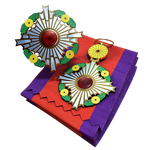
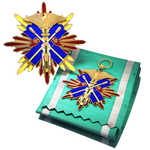
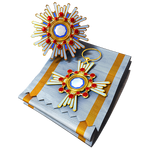
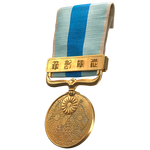
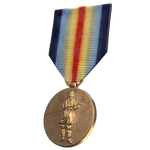
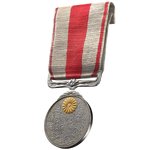
<div id="achievement" style="min-height:180px;">[[File:PCZC067 Yamamoto Chrysanthemum-big.png|150px|left|link=]] '''Grand Cordon of the Supreme Order of the Chrysanthemum'''<br><br>The Supreme Order of the Chrysanthemum, the oldest of the Japanese orders, was established in 1876 by Emperor Mutsuhito. The badge and star of the Order depict a red enameled sun disc casting white rays. Between the rays is the yellow enameled chrysanthemum blossom with green leaves.<br><br>Admiral Yamamoto Isoroku was awarded the Order posthumously, in April 1943. Throughout the history of the Order, aside from Yamamoto, the Imperial Family, and heads of states, only 50 people were honored with this highest award.</div> | <div id="achievement" style="min-height:180px;">[[File:PCZC067 Yamamoto Chrysanthemum-big.png|150px|left|link=]] '''Grand Cordon of the Supreme Order of the Chrysanthemum'''<br><br>The Supreme Order of the Chrysanthemum, the oldest of the Japanese orders, was established in 1876 by Emperor Mutsuhito. The badge and star of the Order depict a red enameled sun disc casting white rays. Between the rays is the yellow enameled chrysanthemum blossom with green leaves.<br><br>Admiral Yamamoto Isoroku was awarded the Order posthumously, in April 1943. Throughout the history of the Order, aside from Yamamoto, the Imperial Family, and heads of states, only 50 people were honored with this highest award.</div> | ||
| Line 93: | Line 96: | ||
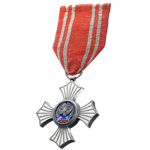
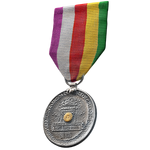
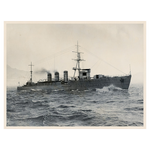
<div id="achievement" style="min-height:180px;">[[File:PCZC074 Yamamoto Seva-big.png|150px|left|link=]] '''Shōwa Enthronement Commemorative Medal'''<br><br>Emperor Hirohito ascended to the throne in December 1926. His motto and throne name throughout his reign was Shōwa, “Enlightened Harmony.” Ironically, it was during his reign that Japan was dragged into the bloodiest war in its history. The enthronement ceremonies were held in November 1928 in Kyoto—the former capital of Japan. As tradition demanded, a medal was established for the participants of the celebrations. It was made of silver with its obverse side depicting the imperial throne surrounded by clouds – a symbol of luck – and encircled by blossoms of cherry and mandarin trees.<br><br>In November 1928, shortly after returning from the U.S.A. where he’d served as a naval attaché for several years, Yamamoto Isoroku, at the rank of Captain, was put in command of the light cruiser ''Isuzu''. Over time, the talented naval commander won the favor and support of the Emperor who appreciated Yamamoto’s professional competence and strong commitment to his cause.</div> | <div id="achievement" style="min-height:180px;">[[File:PCZC074 Yamamoto Seva-big.png|150px|left|link=]] '''Shōwa Enthronement Commemorative Medal'''<br><br>Emperor Hirohito ascended to the throne in December 1926. His motto and throne name throughout his reign was Shōwa, “Enlightened Harmony.” Ironically, it was during his reign that Japan was dragged into the bloodiest war in its history. The enthronement ceremonies were held in November 1928 in Kyoto—the former capital of Japan. As tradition demanded, a medal was established for the participants of the celebrations. It was made of silver with its obverse side depicting the imperial throne surrounded by clouds – a symbol of luck – and encircled by blossoms of cherry and mandarin trees.<br><br>In November 1928, shortly after returning from the U.S.A. where he’d served as a naval attaché for several years, Yamamoto Isoroku, at the rank of Captain, was put in command of the light cruiser ''Isuzu''. Over time, the talented naval commander won the favor and support of the Emperor who appreciated Yamamoto’s professional competence and strong commitment to his cause.</div> | ||
==="Rewards" Collection — Reward=== | ==="Rewards" Collection — Reward=== | ||
Completing this sub-collection provides the following rewards: | Completing this sub-collection provides the following rewards: | ||
| Line 101: | Line 104: | ||
! style="width: 100px; vertical-align:middle" | Icon | ! style="width: 100px; vertical-align:middle" | Icon | ||
! style="width: 100px; vertical-align:middle" | Type | ! style="width: 100px; vertical-align:middle" | Type | ||
|- | |- | ||
| style="vertical-align:middle;" | [[File:Reward_unlock_camo.png|frameless|center|link=]] | | style="vertical-align:middle;" | [[File:Reward_unlock_camo.png|frameless|center|link=]] | ||
| style="vertical-align:middle;" | ''' | | style="vertical-align:middle;" | '''Patches<br> Stripes<br>Tiles<br>Lines''' | ||
|} | |} | ||
</div></div></div> | |||
== | <div class="b-popup"><div class="b-popup_head js-tech-nav_head"><div><h2>"Ships" Collection</h2></div><span class="b-tech-nav_arrow"></span></div><div class="b-popup_content" style="display: none;"><div> | ||
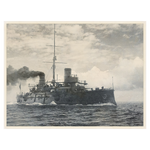
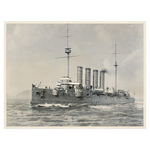
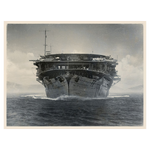
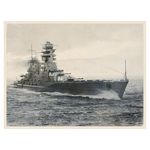
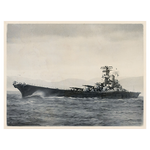
<div id="achievement" style="min-height:180px;">[[File:PCZC075 Yamamoto Nisshin-big.png|150px|left|link=]] '''Armored Cruiser ''Nisshin'''''<br><br>Built in Italy, ''Nisshin'' was one of the renowned Garibaldi-class armored cruisers, which served in four navies around the world. Laid down by the order of Argentine, this cruiser was put on sale shortly before the conflict in the Far East and offered to Russia, but after the Russian government declined to purchase it, Japan stepped in and quickly bought the ''Nisshin''-to-be cruiser. Capable of running at a speed of 20 knots, the ship was protected with a 152mm armor belt, and carried four 203mm main guns and fourteen 152mm guns.<br><br>In a rush, the still-incomplete cruiser together with her sistership was transferred to Japan, where they arrived in February of 1904, during the very first days of the Russo-Japanese War. Two months later, ''Nisshin'' participated in combat actions. In January of 1905, Takano Isoroku, a young Naval Academy graduate, was assigned to ''Nisshin'' to serve as an artillery officer. Later in May that year, the Battle of Tsushima became the first real challenge for the future naval commander.</div> | <div id="achievement" style="min-height:180px;">[[File:PCZC075 Yamamoto Nisshin-big.png|150px|left|link=]] '''Armored Cruiser ''Nisshin'''''<br><br>Built in Italy, ''Nisshin'' was one of the renowned Garibaldi-class armored cruisers, which served in four navies around the world. Laid down by the order of Argentine, this cruiser was put on sale shortly before the conflict in the Far East and offered to Russia, but after the Russian government declined to purchase it, Japan stepped in and quickly bought the ''Nisshin''-to-be cruiser. Capable of running at a speed of 20 knots, the ship was protected with a 152mm armor belt, and carried four 203mm main guns and fourteen 152mm guns.<br><br>In a rush, the still-incomplete cruiser together with her sistership was transferred to Japan, where they arrived in February of 1904, during the very first days of the Russo-Japanese War. Two months later, ''Nisshin'' participated in combat actions. In January of 1905, Takano Isoroku, a young Naval Academy graduate, was assigned to ''Nisshin'' to serve as an artillery officer. Later in May that year, the Battle of Tsushima became the first real challenge for the future naval commander.</div> | ||
| Line 126: | Line 126: | ||
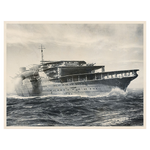
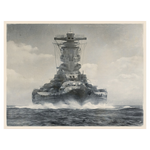
<div id="achievement" style="min-height:180px;">[[File:PCZC082 Yamamoto Musashi-big.png|150px|left|link=]] '''Battleship ''Musashi'''''<br><br>''Yamato''’s sistership was laid down in 1938, and commissioned in the summer of 1942. The ship displaced more than 63,000 tons, two thirds of which accounted for the weight of its armor protection. The battleship’s main battery included the most powerful naval guns in the world, namely nine 460 mm guns. Yamamoto, who later flew his flag on both ships, during his service at the Navy Ministry was opposed to the idea of building extremely expensive giants ''Musashi'' and ''Yamato'', considering the expenditure of such resources unreasonable.<br><br>In February 1943, ''Musashi'' arrived at the main Japanese Navy base on Truk island. The brand new battleship was specifically equipped to serve as a flagship. Therefore, Yamamoto took his flag over to ''Musashi'' immediately after her arrival. Several weeks later, the Admiral set out for the fateful trip to Rabaul. In May 1943, the ashes of the perished Yamamoto were brought to Japan onboard his final flagship, battleship ''Musashi''.</div> | <div id="achievement" style="min-height:180px;">[[File:PCZC082 Yamamoto Musashi-big.png|150px|left|link=]] '''Battleship ''Musashi'''''<br><br>''Yamato''’s sistership was laid down in 1938, and commissioned in the summer of 1942. The ship displaced more than 63,000 tons, two thirds of which accounted for the weight of its armor protection. The battleship’s main battery included the most powerful naval guns in the world, namely nine 460 mm guns. Yamamoto, who later flew his flag on both ships, during his service at the Navy Ministry was opposed to the idea of building extremely expensive giants ''Musashi'' and ''Yamato'', considering the expenditure of such resources unreasonable.<br><br>In February 1943, ''Musashi'' arrived at the main Japanese Navy base on Truk island. The brand new battleship was specifically equipped to serve as a flagship. Therefore, Yamamoto took his flag over to ''Musashi'' immediately after her arrival. Several weeks later, the Admiral set out for the fateful trip to Rabaul. In May 1943, the ashes of the perished Yamamoto were brought to Japan onboard his final flagship, battleship ''Musashi''.</div> | ||
==="Ships" Collection — Reward=== | ==="Ships" Collection — Reward=== | ||
Completing this sub-collection provides the following rewards: | Completing this sub-collection provides the following rewards: | ||
| Line 134: | Line 134: | ||
! style="width: 100px; vertical-align:middle" | Icon | ! style="width: 100px; vertical-align:middle" | Icon | ||
! style="width: 100px; vertical-align:middle" | Type | ! style="width: 100px; vertical-align:middle" | Type | ||
|- | |- | ||
| style="vertical-align:middle;" | [[File:Reward_unlock_camo.png|frameless|center|link=]] | | style="vertical-align:middle;" | [[File:Reward_unlock_camo.png|frameless|center|link=]] | ||
| style="vertical-align:middle;" | ''' | | style="vertical-align:middle;" | '''Patches<br> Stripes<br>Tiles<br>Lines''' | ||
|} | |} | ||
</div></div></div> | |||
== | <div class="b-popup"><div class="b-popup_head js-tech-nav_head"><div><h2>"Miscellaneous" Collection</h2></div><span class="b-tech-nav_arrow"></span></div><div class="b-popup_content" style="display: none;"><div> | ||
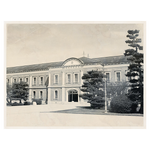
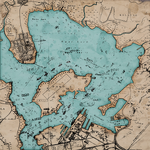
<div id="achievement" style="min-height:180px;">[[File:PCZC083 Yamamoto Building-big.png|150px|left|link=]] '''Imperial Japanese Naval Academy Building on the Island of Etajima'''<br><br>The Imperial Naval Academy was the principal educational establishment for training naval officers. It was founded in 1876 during the first years of Emperor Mutsuhito’s reign, when massive reforms were initialized in Japan, and the country’s naval force was to be formed. In 1888, the Imperial Naval Academy was moved to the island of Etajima situated in Hiroshima Bay, where a special building was constructed to accommodate it in 1893.<br><br>Almost without exception, officers of the Imperial Navy passed through the halls of this Academy. On Etajima, during three years of training in a severe and ascetic atmosphere, the samurai spirit of future combat commanders was tempered. Takano Isoroku, who would later become Admiral Yamamoto, studied at the Naval Academy from 1901 till 1904.</div> | <div id="achievement" style="min-height:180px;">[[File:PCZC083 Yamamoto Building-big.png|150px|left|link=]] '''Imperial Japanese Naval Academy Building on the Island of Etajima'''<br><br>The Imperial Naval Academy was the principal educational establishment for training naval officers. It was founded in 1876 during the first years of Emperor Mutsuhito’s reign, when massive reforms were initialized in Japan, and the country’s naval force was to be formed. In 1888, the Imperial Naval Academy was moved to the island of Etajima situated in Hiroshima Bay, where a special building was constructed to accommodate it in 1893.<br><br>Almost without exception, officers of the Imperial Navy passed through the halls of this Academy. On Etajima, during three years of training in a severe and ascetic atmosphere, the samurai spirit of future combat commanders was tempered. Takano Isoroku, who would later become Admiral Yamamoto, studied at the Naval Academy from 1901 till 1904.</div> | ||
| Line 159: | Line 156: | ||
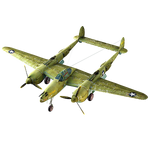
<div id="achievement" style="min-height:180px;">[[File:PCZC090 Yamamoto Lockheed P 38G-big.png|150px|left|link=]] '''Fighter Lockheed P-38G "Lightning" ''Miss Virginia'', No. 147'''<br><br>The radiogram, which contained information about the time and route of the Commander-in-Chief’s visits to the islands of Bougainville and Shortland, was intercepted and deciphered by US naval intelligence on April 14, 1943. US President Franklin D. Roosevelt personally ordered Navy command to “get Yamamoto.”<br><br>Rear Admiral Mitscher who was commanding air forces on the Solomon Islands assigned the 339th Squadron to the task code-named Vengeance, as only that squadron had P-38G ''Lightning'' fighters with sufficient operational range. In a quick air battle above Bougainville, they lost one P-38G and shot down the aircraft with Yamamoto and his staff on board. The Bomber ''Betty'' carrying the Admiral was shot down by the fighter No. 147 controlled by First Lieutenant Rex T. Barber.</div> | <div id="achievement" style="min-height:180px;">[[File:PCZC090 Yamamoto Lockheed P 38G-big.png|150px|left|link=]] '''Fighter Lockheed P-38G "Lightning" ''Miss Virginia'', No. 147'''<br><br>The radiogram, which contained information about the time and route of the Commander-in-Chief’s visits to the islands of Bougainville and Shortland, was intercepted and deciphered by US naval intelligence on April 14, 1943. US President Franklin D. Roosevelt personally ordered Navy command to “get Yamamoto.”<br><br>Rear Admiral Mitscher who was commanding air forces on the Solomon Islands assigned the 339th Squadron to the task code-named Vengeance, as only that squadron had P-38G ''Lightning'' fighters with sufficient operational range. In a quick air battle above Bougainville, they lost one P-38G and shot down the aircraft with Yamamoto and his staff on board. The Bomber ''Betty'' carrying the Admiral was shot down by the fighter No. 147 controlled by First Lieutenant Rex T. Barber.</div> | ||
==="Miscellaneous" Collection — Reward=== | ==="Miscellaneous" Collection — Reward=== | ||
Completing this sub-collection provides the following rewards: | Completing this sub-collection provides the following rewards: | ||
| Line 173: | Line 170: | ||
* Unlocks the ability to mount two [[Ship:Flags|flags]] on all [[Ship:Ships of Japan|Japanese ships]]. | * Unlocks the ability to mount two [[Ship:Flags|flags]] on all [[Ship:Ships of Japan|Japanese ships]]. | ||
|} | |} | ||
</div></div></div> | |||
==Overall Reward== | ==Overall Reward== | ||
Completing the entire collection provides the following rewards: | Completing the entire collection provides the following rewards: | ||
Latest revision as of 16:31, 3 August 2026

|
Yamamoto IsorokuThis collection is available once players complete the final task of the "Yamamoto Isoroku" campaign. Earning the first collection item via completion of the campaign or purchase of special containers from the Wargaming store unlocks the ability for collection items to drop from regular Containers earned through daily missions.
|
"Uniform" Collection

"Uniform Items" Collection
"Rewards" Collection
"Ships" Collection
"Miscellaneous" Collection


Overall Reward
Completing the entire collection provides the following rewards:
| Icon | Name | Notes |
|---|---|---|
 |
Yamamoto Isoroku | "My soul is always ready to fight!" |
Category:
